
Introduction
A traveler lands in São Paulo, pays with USDT using a crypto card. Hours later, another user in Germany taps their phone and spends Bitcoin at a café. Meanwhile, someone in the United States tries to apply… and simply can’t.
Same product. Completely different reality.
That’s the truth about crypto debit cards in 2026: availability is everything.
If you don’t understand where the Binance Card works — and why — you’re not optimizing your strategy… you’re guessing.
🌍 Where the Binance Card Is Available in 2026
The Binance Card is not globally available, but it’s expanding aggressively.
✅ Europe (Strongest Coverage)
The European Economic Area (EEA) remains the core region:
- Germany, France, Spain, Portugal
- Italy, Netherlands, Belgium
- Poland, Romania, Czech Republic
- Sweden, Finland, Denmark
👉 Over 30+ European countries support the card
This is where Binance found regulatory breathing room — and scaled first.
🇧🇷 Latin America (Fast Growth Zone)
- Brazil (fully active)
- Argentina
- Colombia
- Mexico
- Peru (confirmed support in Global Program)
Brazil is especially strategic — Binance even highlights it as a key launch region
🌏 CIS & Emerging Markets (Newest Expansion)
In 2026, Binance pushed into:
- Armenia
- Kazakhstan
- Uzbekistan
This expansion allows users to:
- Spend 100+ cryptocurrencies
- Convert instantly at checkout
- Earn cashback (~2%)
This is a major signal: Binance is targeting underbanked + high-adoption regions
🌐 Limited / Partial Availability
Some regions have restricted or pilot access:
- Turkey (via partnerships)
- Australia (limited rollout)
- Vietnam (select users)
❌ Where Binance Card Is NOT Available
This is where most people get it wrong.
🚫 Not supported:
- United States
- Canada
- Japan
- China
Main reason: regulation and compliance pressure
Even if Binance operates in a country…
👉 that does NOT mean the card is available.
🇺🇸 Why Binance Card Is Not Available in the United States (And Why That Matters)
Imagine walking into a high-end coffee shop in New York.
You pull out your phone, ready to pay with USDT using a crypto card…
but the option simply doesn’t exist.
Not because the technology failed.
Not because demand is low.
But because the system itself doesn’t allow it.
⚙️ The Hidden Layer Most Users Never See
At first glance, a crypto debit card looks simple:
👉 You hold crypto
👉 You tap your card
👉 It converts to fiat instantly
But behind that single tap… there are three invisible systems working together:
- Crypto regulation (local laws)
- Payment networks (Visa / Mastercard)
- Banking partners (issuers)
If one of these layers breaks…
👉 the entire product disappears.
🚫 The U.S. Problem: Too Big, Too Strict
Now picture the United States.
It’s not just another country — it’s the most regulated financial market in the world.
- The SEC treats many crypto assets as securities
- The IRS tracks taxable events aggressively
- The FinCEN enforces strict compliance rules
This creates a reality where:
👉 launching a crypto card is not just difficult…
👉 it’s structurally risky for global players like Binance
🔍 Binance vs. the U.S. Market
Binance didn’t simply “choose” to stay out.
It had to adapt.
- Global Binance → Restricted in the U.S.
- Binance.US → Separate, limited platform
And here’s the key detail:
👉 Binance.US does NOT offer a debit card
So even if the brand exists…
👉 the infrastructure needed for the card does not.
💳 Why Competitors Succeeded (And Binance Didn’t)
Here’s where things get interesting.
Crypto cards DO exist in the U.S.
- Coinbase Card
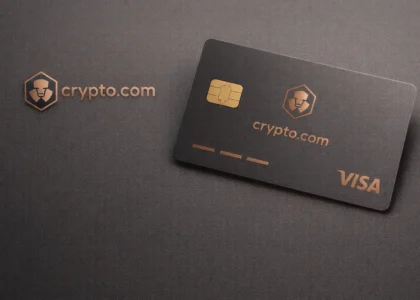
- Crypto.com Card
So what’s the difference?
👉 They built local compliance first
- Licensed entities
- U.S.-based banking partners
- Full regulatory alignment
Binance, on the other hand, focused on:
👉 global scalability first
👉 regulatory adaptation later
And in the U.S…
that approach doesn’t work.
🌍 A Global Asymmetry Most People Miss
Now zoom out.
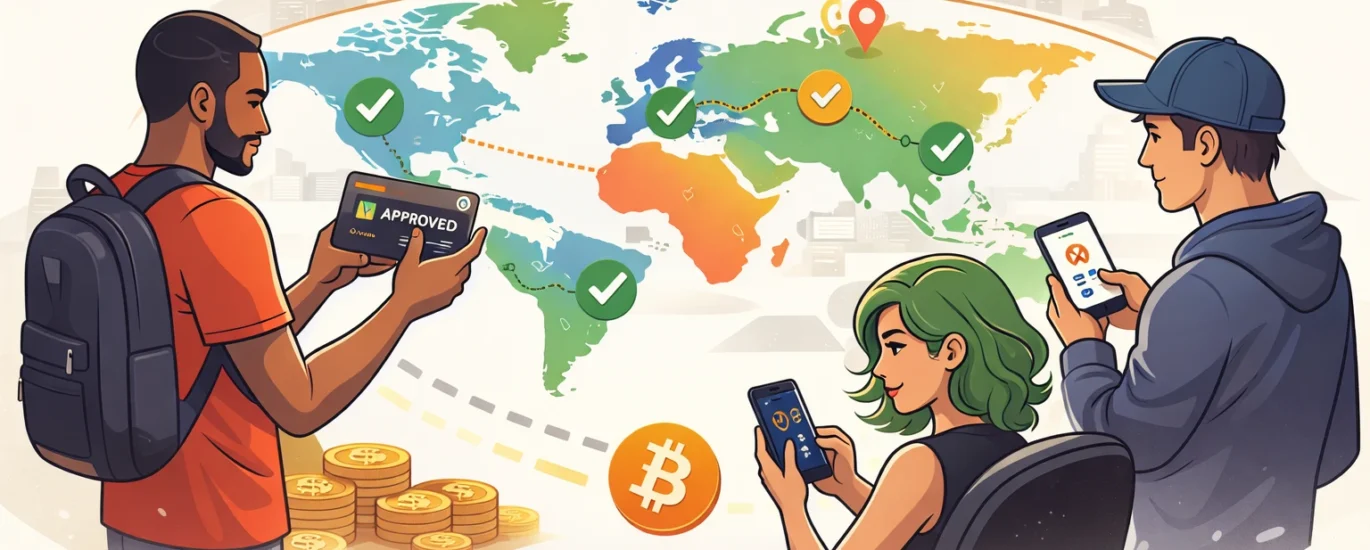
Look at the world map again:
- 🇪🇺 Europe → Binance Card dominant
- 🇧🇷 Brazil → Rapid adoption
- 🌏 Emerging markets → Expansion
- 🇺🇸 United States → Blocked
This is not random.
It’s a pattern.
👉 Binance grows where regulation is flexible
👉 It pauses where regulation is aggressive
🧠 Why This Matters More Than You Think
Most users see this as a limitation.
Smart operators see something else:
👉 market segmentation
Because where Binance is absent:
- Competitors dominate
- Fees differ
- Cashback structures change
- User behavior shifts
⚠️ The Temptation (And the Risk)
Some users try to bypass this.
Using VPNs. Foreign addresses. Workarounds.
It sounds clever… until it isn’t.
👉 Accounts can be restricted
👉 Funds can be frozen
👉 Compliance checks can fail
This is not a technical problem.
👉 It’s a legal boundary.
🚀 The Bigger Picture
Now imagine the next phase:
- Stablecoins integrated with traditional banks
- Payment rails merging with blockchain
- Real-time global settlement
When that happens…
👉 these restrictions won’t disappear overnight
👉 but they will reshape the entire landscape
And companies like Binance are positioning themselves for that future.
📦 Understand the Full System
Before choosing any crypto card, understand how the system works:
🔗 https://damadefi.com/crypto-debit-cards-usdt-usdc-bitcoin-visa-mastercard/
📦 Compare Available Options
If Binance Card is not available in your region:
- 🔗 OKX Card Review
https://damadefi.com/okx-card-review-2026-usdt-spending-and-real-fees/ - 🔗 Crypto.com Card Review
https://damadefi.com/crypto-com-card-review-2026/
⚠️ Why Availability Is So Fragmented
Picture this:
You’re not dealing with one system — you’re dealing with three layers at once:
- Crypto regulation (local laws)
- Payment networks (Visa/Mastercard approval)
- Binance licensing status
If one breaks… the card disappears.
That’s why Europe dominates:
- Clear regulation
- Open banking infrastructure
- Friendly fintech environment
📊 Global Availability Snapshot (2026)
| Region | Availability Level | Key Notes |
|---|---|---|
| Europe | ✅ High | Core market (30+ countries) |
| Latin America | ⚡ Growing | Brazil leads adoption |
| CIS | 🚀 Expanding | New 2026 rollout |
| Asia-Pacific | ⚠️ Limited | Regulatory barriers |
| North America | ❌ Not available | Strict compliance |
💡 What This Means Strategically
This is where most investors miss the opportunity.
Availability is not just access — it’s alpha.
If you are in a supported country:
- You can arbitrage fees
- You can optimize cashback
- You can spend stablecoins efficiently
If you are NOT:
- You need alternatives (OKX, Crypto.com)
- Or you build strategies using transfers instead of cards
📦 CTA BOX — Start Here (Pillar)
👉 New to crypto cards? This is your starting point
🔗 https://damadefi.com/crypto-debit-cards-usdt-usdc-bitcoin-visa-mastercard/
Understand:
- How cards work behind the scenes
- Which networks are cheapest
- How to avoid hidden spreads
📦 CTA BOX — Deep Dive Binance (Latest + Cluster)
🔥 Already exploring Binance Card?
- 🔗 Binance Card Review 2026
https://damadefi.com/binance-card-review-2026-fees-cashback-and-hidden-costs/ - 🔗 Binance Cashback 2026
https://damadefi.com/binance-card-cashback-2026/ - 🔗 Binance Fees 2026
https://damadefi.com/binance-card-fees-2026/
These are your money pages — they convert.
📦 CTA BOX — Compare Alternatives
Not available in your country?
- 🔗 OKX Card Review
https://damadefi.com/okx-card-review-2026-usdt-spending-and-real-fees/ - 🔗 Crypto.com Card Review
https://damadefi.com/crypto-com-card-review-2026/
Different regions → different winners.
🔄 How to Check If You’re Eligible
Simple but critical:
- Open Binance app
- Go to Card section
- Check availability
- Complete KYC
⚠️ No shortcuts:
Using VPN = account risk
🚀 The Future of Crypto Card Availability
Imagine this:
- Stablecoins integrated with central banks
- Mastercard rails connected directly to blockchain
- Real-time FX conversion without intermediaries
That’s where this is going.
And Binance is positioning itself not as a card provider…
👉 but as a global payment layer
Conclusion
The Binance Card in 2026 is not a global product.
It’s a strategic rollout shaped by regulation, infrastructure, and adoption curves.
- Europe → dominance
- Latin America → acceleration
- Emerging markets → expansion
- North America → blocked
If you understand this map…
👉 you stop being just a user
👉 and start thinking like an operator inside the system
FAQ — Binance Card Countries 2026
1. Is Binance Card available worldwide?
No. It’s limited to specific countries due to regulation.
2. Which region has the most availability?
Europe (30+ countries).
3. Can I use it in the US?
No, not supported.
4. Is Brazil supported?
Yes, one of the main markets.
5. Can I bypass restrictions with VPN?
No — this violates Binance terms.
6. Is Latin America expanding?
Yes, rapidly.
7. Does availability change?
Yes, frequently.
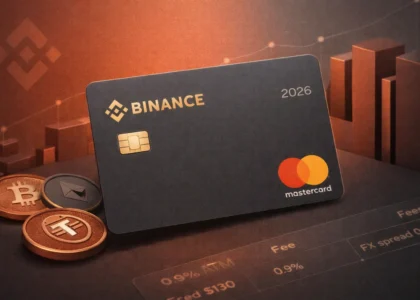
8. What network does it use?
Usually Mastercard.
9. Do all Binance users get access?
No, only supported countries + KYC.
10. Are there alternatives?
Yes: OKX, Crypto.com.