
Crypto debit cards look like normal bank cards, but behind the scenes they combine blockchain wallets with traditional payment rails like Visa and Mastercard. These card networks do not hold cryptocurrency themselves; they provide the global payment infrastructure that processes transactions between merchants and banks.
When you swipe a crypto card, the merchant terminal treats it exactly like a regular debit card. The difference happens in the background: the platform instantly converts your crypto balance into fiat currency and settles the payment through the card network.
Most modern crypto cards — including Binance, Coinbase, and OKX cards — rely on Visa or Mastercard rails, which is why they can be used at millions of merchants worldwide.
Quick Navigation
⬛ Pillar Guide
Crypto Debit Cards in 2026 — Fees, Cashback and Real Costs
https://damadefi.com/crypto-debit-cards-usdt-usdc-bitcoin-visa-mastercard/
The 4 Components Behind Every Crypto Card
| Component | Role |
|---|---|
| Wallet | Holds BTC, USDT or other assets |
| Exchange / Platform | Converts crypto into fiat |
| Card issuer | Licensed financial institution |
| Network | Visa or Mastercard processing rail |
The merchant never receives crypto. They receive fiat currency through the card network settlement system.
How the Transaction Actually Happens
Step-by-step flow:
- User swipes crypto debit card
- Merchant terminal sends authorization request
- Payment network (Visa/Mastercard) routes request
- Exchange converts crypto to fiat instantly
- Payment approved and settled
This is why merchants accept crypto cards without changing their systems.
Transaction Flow Example
| Step | Action |
|---|---|
| 1 | Card tap at POS terminal |
| 2 | Network sends authorization request |
| 3 | Platform converts USDT/BTC |
| 4 | Fiat sent to merchant bank |
| 5 | Payment approved |
Total processing time: 1–3 seconds.
Visa vs Mastercard in Crypto Cards
Most crypto cards partner with one of the two global networks.
| Network | Approx Merchant Acceptance |
|---|---|
| Visa | 150M+ locations |
| Mastercard | 100M+ locations |
Both networks provide:
• global acceptance
• fraud protection
• chargeback systems
• POS terminal compatibility
Mastercard Crypto Partner Program: Why Payment Networks Are Integrating Blockchain
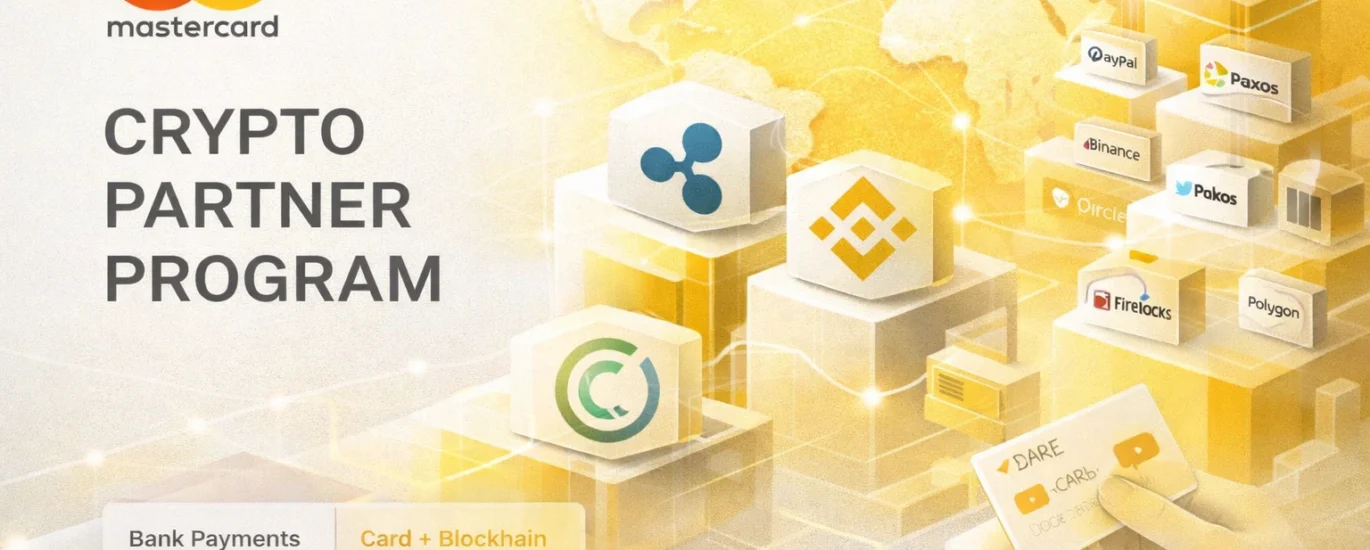
In 2026, Mastercard launched a global initiative called the Crypto Partner Program, bringing together more than 85 companies from the digital-asset industry to collaborate on real-world payment infrastructure. Participants include major crypto exchanges, payment companies and blockchain projects such as Binance, Ripple, Circle, PayPal, Paxos and Fireblocks.
The goal is not speculation or trading. The initiative focuses on practical payment use cases, including cross-border transfers, stablecoin settlement, and crypto-to-fiat payments that operate seamlessly through existing card networks.
In other words, instead of replacing Visa and Mastercard rails, the crypto industry is increasingly plugging blockchain infrastructure into global payment systems.
How Mastercard Is Connecting Crypto to Global Payments
The program acts as a collaboration framework between traditional financial infrastructure and blockchain companies.
| Layer | Role |
|---|---|
| Blockchain companies | Build wallets, tokens and smart-contract systems |
| Payment companies | Provide on-ramps, off-ramps and settlement |
| Card networks | Process payments through global merchant rails |
| Financial institutions | Ensure compliance and banking connectivity |
This structure allows blockchain transactions to interact with the existing global payment ecosystem without merchants changing their systems.
Major Companies Participating
The Crypto Partner Program includes exchanges, infrastructure providers and payment companies.
| Category | Example Participants |
|---|---|
| Crypto exchanges | Binance, Gemini, Bybit |
| Stablecoin issuers | Circle (USDC), Paxos |
| Blockchain infrastructure | Fireblocks, Polygon |
| Payments & fintech | PayPal, MoonPay |
| Settlement networks | Ripple |
These companies collaborate with Mastercard to design future payment services that combine blockchain speed with card network scale.
Why This Matters for Crypto Debit Cards
Crypto debit cards depend on two systems working together:
- Blockchain infrastructure
- Global payment rails
Mastercard and Visa already process billions of transactions every year. Integrating blockchain into this infrastructure allows crypto cards to scale globally.
| System | Function |
|---|---|
| Blockchain | Holds digital assets |
| Exchange / issuer | Converts crypto to fiat |
| Card network | Processes merchant payments |
| Merchant bank | Receives settlement |
Real Payment Flow Example
A user pays $150 with USDT using a crypto debit card.
| Step | Process |
|---|---|
| 1 | User taps crypto card |
| 2 | Mastercard network sends authorization |
| 3 | Platform converts USDT to fiat |
| 4 | Merchant bank receives payment |
| 5 | Transaction approved |
Total time: 1–3 seconds.
Simulation: Stablecoin Payments via Card Networks
Example spending using USDT through a crypto debit card.
| Monthly Spending | Conversion Spread (0.5%) | Cashback 2% | Net Result |
|---|---|---|---|
| $1,000 | $5 | $20 | +$15 |
| $5,000 | $25 | $100 | +$75 |
| $10,000 | $50 | $200 | +$150 |
This model explains why many crypto cards offer cashback incentives — it offsets the conversion spread.
Cross-Border Payment Comparison
| Method | Cost | Settlement Time |
|---|---|---|
| Bank wire (SWIFT) | 2–5% | 1–5 days |
| Card network + crypto | ~0.5–1% | Seconds |
| On-chain transfer | <$1 | Minutes |
The Mastercard initiative aims to combine blockchain efficiency with global payment acceptance.
Why Payment Networks Are Partnering with Crypto
Historically, crypto operated outside the traditional financial system. Now the industry is moving toward integration instead of disruption.
Mastercard describes the shift as moving from parallel financial systems to practical applications such as remittances, business payments and international settlements.
This strategy allows blockchain innovation to scale using infrastructure already accepted in over 100 million merchant locations worldwide.
Simulation: Future Global Payment Stack
| Layer | Technology |
|---|---|
| User wallet | Crypto app |
| Asset | Stablecoins or BTC |
| Conversion | Exchange liquidity |
| Payment rail | Mastercard / Visa |
| Merchant settlement | Bank |
This hybrid model is increasingly considered the most realistic path for crypto adoption in everyday commerce.
What This Means for Crypto Card Users
For consumers using crypto debit cards, these partnerships bring three advantages:
• higher merchant acceptance
• faster cross-border payments
• integration with stablecoin systems
Instead of replacing the existing financial system, blockchain technology is being integrated directly into it.
Real Crypto Spending Example
User pays for a $120 purchase using USDT.
| Step | Amount |
|---|---|
| Purchase | $120 |
| Conversion | 120 USDT |
| Network processing | Visa/Mastercard |
| Merchant receives | $120 fiat |
The merchant does not see crypto.
Crypto Card vs Bank Card
| Feature | Crypto Card | Bank Debit Card |
|---|---|---|
| Funding source | Crypto wallet | Bank account |
| Conversion | Crypto → fiat | None |
| Network | Visa/Mastercard | Visa/Mastercard |
| Cashback | Often higher | Usually lower |
Example: Spending Stablecoins
Stablecoins are commonly used because volatility is lower.
| Asset | Typical Use |
|---|---|
| USDT | Daily spending |
| USDC | International transfers |
| BTC | Long-term spending |
Costs Behind the Scenes
Most crypto cards advertise 0% spending fees, but real costs come from conversion spreads.
| Cost Type | Typical Range |
|---|---|
| Conversion spread | 0.2% – 1% |
| ATM withdrawal | ~0.9% |
| Card issuance | usually free |
Cashback Programs
Many crypto cards reward users with tokens.
| Card | Cashback |
|---|---|
| Binance Card | up to ~8% |
| OKX Card | ~1–3% |
| Crypto.com Card | up to ~5% |
Spending Simulation
Example monthly spending:
| Monthly Spend | Cashback 2% | Cashback 4% |
|---|---|---|
| $1000 | $20 | $40 |
| $5000 | $100 | $200 |
| $10,000 | $200 | $400 |
When Crypto Cards Make Sense
Best scenarios:
• traveling internationally
• spending stablecoins
• earning cashback rewards
• avoiding bank FX spreads
CTA — Related Guides
⬛ Complete Crypto Debit Card Guide
Crypto Cards 2026 — Fees, Cashback and Payment Rails
https://damadefi.com/crypto-debit-cards-usdt-usdc-bitcoin-visa-mastercard/
⬛ Binance Card Fees Explained
Real spreads, limits and costs
https://damadefi.com/binance-card-fees-2026-binance-card-fees-2026/
⬛ OKX Card Review 2026
USDT spending and real fees
https://damadefi.com/okx-card-review-2026-usdt-spending-and-real-fees/
FAQ (30 Questions)
1 What is a crypto debit card
A card that lets users spend cryptocurrency through traditional payment networks.
2 Are crypto cards Visa or Mastercard
Most are powered by Visa or Mastercard.
3 Do Visa or Mastercard hold crypto
No. They only process payment authorization.
4 What happens when you pay with crypto
The platform converts crypto to fiat instantly.
5 Do merchants receive crypto
No. They receive fiat currency.
6 Are crypto cards accepted everywhere
They work anywhere Visa or Mastercard is accepted.
7 Can crypto cards withdraw cash
Yes through ATM networks.
8 Are there conversion fees
Usually 0.2% to 1%.
9 Are stablecoins better for spending
Yes due to lower volatility.
10 What is a payment rail
Infrastructure that processes financial transactions.
11 Do crypto cards work online
Yes.
12 Can they be used internationally
Yes.
13 Are crypto cards safe
Security depends on the exchange and card issuer.
14 Do they require KYC
Yes for most cards.
15 Can you choose which crypto to spend
Many platforms allow asset selection.
16 Do crypto cards offer cashback
Yes many programs reward crypto.
17 Is there a spending limit
Yes daily and monthly limits apply.
18 Do ATM withdrawals cost money
Usually about 0.9%.
19 Can crypto cards be frozen
Yes through the mobile app.
20 Do they work with Apple Pay
Some support it depending on region.
21 Are crypto cards credit cards
Most are debit cards.
22 Can you hold multiple assets
Yes.
23 Are rewards taxable
Depends on jurisdiction.
24 Do merchants know it is crypto
No.
25 Are they good for travel
Yes.
26 Can crypto cards replace bank cards
For many users yes.
27 Do they work with stablecoins
Yes commonly USDT and USDC.
28 Are they available worldwide
Availability depends on regulation.
29 Are there hidden costs
Conversion spreads are the main cost.
30 Are crypto cards the future of payments
Many fintech analysts believe they will grow significantly.