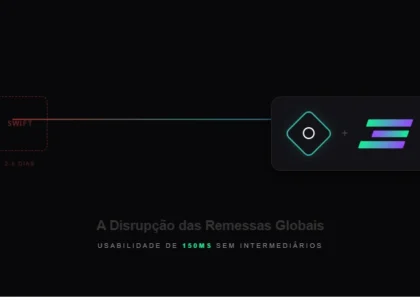

For decades, sending money internationally meant one thing: banks. And banks meant SWIFT.
If you’ve ever wired money overseas, you know the process. High fees. Delays. Uncertainty. Hidden conversion spreads. Sometimes funds take two to five business days to settle — even longer across time zones.
Now something fundamental is changing.
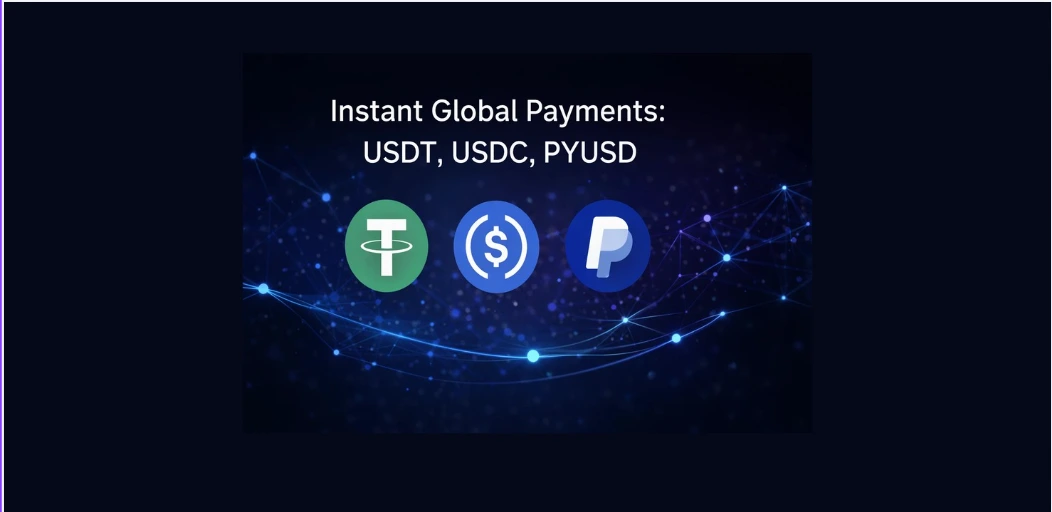
Stablecoin payments are quietly reshaping instant global payments — not as theory, but as daily infrastructure used by millions worldwide. USDT, USDC, and PYUSD are no longer “crypto experiments.” They are functioning as a practical SWIFT alternative.
And unlike legacy banking rails, blockchain settlement does not sleep.
The Problem with SWIFT-Based International Transfers
SWIFT (Society for Worldwide Interbank Financial Telecommunication) is not actually a payment system. It’s a messaging network used by banks to coordinate transfers.
That means:
- Multiple intermediaries
- Correspondent banking chains
- FX conversion fees
- Settlement delays
- Compliance checks at each layer
A single transfer can touch 3–5 financial institutions before completion.
Typical SWIFT Transfer Characteristics
| Feature | SWIFT Bank Transfer |
|---|---|
| Settlement Time | 1–5 business days |
| Availability | Business hours only |
| Intermediaries | Multiple |
| Transparency | Low |
| Fees | $20–$60 + FX spread |
| Reversibility | Possible |
| Global Reach | Broad |
SWIFT works — but it’s expensive and slow by modern standards.
What Are Stablecoin Payments?
Stablecoins are blockchain-based digital dollars pegged to fiat currencies — primarily USD.
The three major players in global payments today:
- USDT (Tether)
- USDC (Circle)
- PYUSD (PayPal USD)
Unlike volatile cryptocurrencies, stablecoins are designed to maintain price stability (1 token ≈ $1 USD).
They move across blockchain networks such as:
- Ethereum
- Solana
- Tron
- Avalanche
- Polygon
And settlement occurs directly on-chain — often in seconds.
Stablecoin Payments vs SWIFT: A Direct Comparison
Let’s compare them structurally.
| Feature | SWIFT | Stablecoin Payments |
|---|---|---|
| Settlement Speed | 1–5 days | Seconds to minutes |
| Availability | Business hours | 24/7/365 |
| Intermediaries | Multiple banks | None (peer-to-peer) |
| Transparency | Limited | Public blockchain |
| Average Cost | $20–$60 | <$1 (network dependent) |
| Finality | Delayed | Near-instant |
| FX Spread | Often hidden | Market-based |
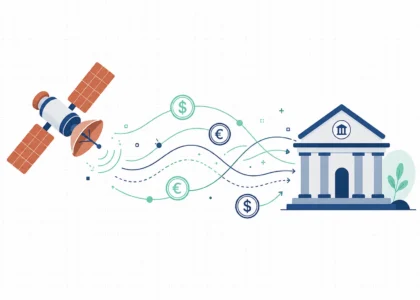
Stablecoin payments remove correspondent banking entirely.
That’s why many analysts now describe them as a real SWIFT alternative.
Why the U.S. Market Is Paying Attention
In the United States, instant global payments are increasingly important for:
- Remote workers
- Freelancers paid internationally
- Cross-border e-commerce
- Family remittances
- Global investment flows
Traditional wires through U.S. banks can be costly. Stablecoins offer:
- Faster settlement
- Lower cost
- Direct custody
- Reduced counterparty friction
Major institutions are watching closely — and participating.
PayPal launched PYUSD.
Circle (USDC issuer) works directly with regulated U.S. financial institutions.
Tether (USDT) dominates emerging market flows.
This is no longer fringe technology.
Beyond Payments: What If Your Bitcoin Could Generate Income?
Stablecoins are redefining instant global payments — but what about income generation?
Discover how Bitcoin options can create synthetic dividends without selling your BTC position.→ Explore the strategy here:
https://damadefi.com/dividendos-sinteticos-via-opcoes-de-bitcoin/
Network Choice Matters: Ethereum vs Solana vs Tron
Not all stablecoin payments are equal. The blockchain used affects cost and speed.
| Network | Avg Fee | Avg Speed | Usage |
|---|---|---|---|
| Ethereum | $3–$20 | Minutes | High security, higher cost |
| Solana | <$0.01 | Seconds | Fast retail payments |
| Tron | <$1 | Seconds | Popular for remittances |
| Avalanche | <$1 | Seconds | DeFi and enterprise |
For instant global payments, lower-fee networks like Solana and Tron are increasingly preferred for practical transfers.
How Stablecoin Payments Actually Work
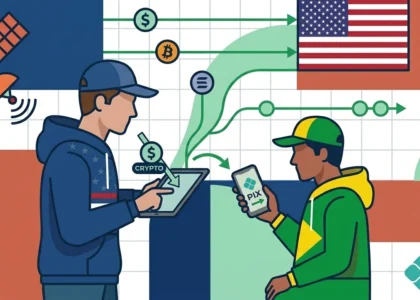
When someone sends USDC from New York to Brazil:
- https://damadefi.com/how-to-send-money-abroad-with-usdt/Wallet signs transaction.
- Blockchain validates it.
- Funds settle on-chain.
- Recipient sees balance almost instantly.
- Recipient may hold, convert, or off-ramp locally.
There is no correspondent bank.
There is no time-zone delay.
There is no multi-day settlement risk.
That is structural innovation.
Regulatory Considerations (Especially for U.S. Users)
Stablecoins exist in a regulatory gray-to-evolving area.
Key points for U.S. users:
- USDC is issued by a regulated U.S. entity (Circle).
- PYUSD operates within PayPal’s regulated structure.
- USDT is globally dominant but operates offshore.
- Off-ramping requires KYC on exchanges.
- Taxes may apply depending on usage.
Instant global payments via stablecoins are efficient — but compliance awareness is essential.
Risks and Limitations
No system is perfect.
Stablecoin Risks:
- Depeg risk (temporary loss of $1 peg)
- Smart contract vulnerabilities
- Exchange custody risk
- Regulatory changes
- User error (irreversible transactions)
SWIFT Risks:
- Delays
- Hidden fees
- Intermediary risk
- Reversals or holds
Users must choose trade-offs.
Is SWIFT Being Replaced?
Not overnight.
But in corridors where speed and cost matter most — yes, stablecoin payments are increasingly replacing SWIFT.
Emerging markets already use USDT as a dollar proxy.
Freelancers are paid in USDC.
E-commerce settles on-chain.
Institutional desks move liquidity via stablecoins.
The replacement is incremental — but accelerating.
Dama’s Take: Practical Strategy
Here is how I personally think about instant global payments:
- Stablecoins are rails.
- Bitcoin is reserve.
- Solana is speed layer.
- USDC is clean liquidity.
- PYUSD is regulated bridge.
- SWIFT is legacy fallback.
I don’t replace banks entirely.
I reduce dependency.
That’s the difference.
Stablecoins are not rebellion.
They are efficiency.
The Future of Instant Global Payments
We are entering a hybrid world:
- Banks integrate stablecoins.
- Payment apps integrate blockchain rails.
- Visa and Mastercard test settlement layers.
- Governments regulate digital dollar equivalents.
The question is no longer if stablecoins will coexist with SWIFT.
It’s how much volume will migrate.
Beyond Payments: What If Your Bitcoin Could Generate Income?
Stablecoins are redefining instant global payments — but what about income generation?
Discover how Bitcoin options can create synthetic dividends without selling your BTC position.
→ Explore the strategy here:
https://damadefi.com/dividendos-sinteticos-via-opcoes-de-bitcoin/
Frequently Asked Questions (FAQ)
1. Are stablecoin payments legal in the U.S.?
Yes. Holding and transferring stablecoins is legal. However, tax implications and reporting requirements apply.
2. Are stablecoins safer than bank wires?
They remove intermediary risk but introduce smart contract and custody risk. Security depends on user practices.
3. Is USDC safer than USDT?
USDC is U.S.-regulated. USDT has broader global liquidity. Both carry different risk profiles.
4. Can stablecoins fully replace SWIFT?
Not yet. Banks still dominate large institutional transfers. But stablecoins are growing rapidly in cross-border retail use.
5. Are stablecoin transactions reversible?
No. On-chain transfers are final. Double-check addresses.
6. What is the cheapest blockchain for stablecoin payments?
Currently Solana and Tron offer the lowest fees for retail transfers.
7. Do I need a bank account to use stablecoins?
You need a wallet. To convert back to fiat, you typically need an exchange account.
8. Is PYUSD safer because it’s PayPal?
PYUSD operates within U.S. regulatory structure, which may increase institutional confidence.
9. How fast are stablecoin payments compared to SWIFT?
Seconds to minutes versus days.
10. What happens if a stablecoin loses its peg?
Temporary price deviations may occur. Liquidity and issuer backing are key risk factors.
11. Are stablecoins taxed in the U.S.?
Taxation depends on usage and capital gains treatment. Consult a tax professional.
12. Can businesses use stablecoins for payroll?
Some global companies already do, especially for international contractors.
13. Is blockchain transparent?
Yes. Transactions are publicly viewable, though wallet identities may remain pseudonymous.
14. Do stablecoins eliminate FX risk?
They eliminate USD volatility but not conversion risk if switching currencies.
15. Are stablecoins insured like banks?
No FDIC insurance applies to self-custody wallets.
16. How do stablecoins maintain their $1 value?
Most major stablecoins are backed by reserves.
USDC and PYUSD claim to hold dollar-denominated assets such as:
- Cash equivalents
- Short-term U.S. Treasuries
- Regulated financial instruments
USDT maintains a diversified reserve model that includes Treasury bills and other financial assets.
The peg is maintained through arbitrage. If a stablecoin trades below $1, traders buy and redeem it for $1 in underlying assets. If it trades above $1, more tokens are minted.
However, peg stability depends on:
- Transparency
- Liquidity
- Market confidence
- Redemption mechanisms
It is not a mathematical guarantee — it’s an economic mechanism.
17. Can stablecoins be frozen or blocked?
Yes — depending on the issuer.
USDC and USDT are centralized stablecoins. That means:
- Issuers can freeze specific wallet addresses.
- Tokens can be blacklisted.
- Regulatory compliance can be enforced.
This is one major difference between stablecoins and decentralized cryptocurrencies like Bitcoin.
From a regulatory perspective, this makes stablecoins more acceptable to institutions.
From a censorship-resistance perspective, it makes them less sovereign than Bitcoin.
18. What happens if a blockchain network goes down?
If the blockchain network experiences congestion or outages:
- Transactions may be delayed.
- Fees may temporarily increase.
- Settlement can slow down.
For example:
- Ethereum can experience high gas fees during peak demand.
- Solana has historically faced occasional network outages.
- Tron has remained relatively stable but is less decentralized.
Network risk is part of infrastructure risk. Choosing the right chain for instant global payments matters.
19. Are stablecoins insured like bank deposits?
No.
Stablecoins are not covered by FDIC insurance when held in self-custody wallets.
If you hold stablecoins on:
- A regulated exchange → protection depends on platform policy.
- A self-custody wallet → you bear full responsibility.
Unlike bank deposits, there is no government-backed safety net.
20. How do stablecoin payments affect U.S. tax reporting?
In the United States, stablecoins are generally treated as property for tax purposes.
That means:
- Selling stablecoins for fiat may trigger capital gains (even if minimal).
- Using stablecoins for purchases may count as a taxable event.
- Transferring between wallets is not taxable.
Because stablecoins usually remain near $1, gains are often small — but reporting rules still apply.
Tax clarity is evolving, so professional guidance is recommended.
21. Can businesses accept stablecoin payments legally?
Yes, many businesses globally already do.
Businesses that accept stablecoins must consider:
- Accounting treatment
- Regulatory compliance
- Tax reporting
- Off-ramp liquidity
In the U.S., companies accepting stablecoins must still comply with standard financial reporting and KYC/AML requirements when converting to fiat.
Stablecoins simplify settlement — they do not remove regulatory obligations.
22. Are stablecoin payments anonymous?
No.
Stablecoin transactions are pseudonymous.
That means:
- Wallet addresses are visible publicly.
- Transaction history is permanent.
- Analytics companies can trace patterns.
While names are not directly attached, exchanges require KYC. So once funds enter or leave regulated platforms, identity can be linked.
Stablecoins are transparent, not anonymous.
23. What is the difference between on-chain settlement and traditional clearing?
Traditional banking settlement often involves:
- Clearinghouses
- Batch processing
- End-of-day reconciliation
- Interbank settlement windows
On-chain settlement:
- Occurs in real time
- Is recorded on a distributed ledger
- Does not require centralized clearing intermediaries
- Is final once confirmed
This reduces settlement risk and counterparty exposure.
24. Can stablecoins be used for large institutional transfers?
Yes — and they already are.
Institutional desks use stablecoins for:
- Liquidity movement between exchanges
- Cross-border treasury management
- Arbitrage
- Crypto market settlement
However, very large transfers may still rely on traditional banking rails for compliance, legal clarity, and insurance protections.
Stablecoins are increasingly complementary to institutional finance — not fully replacing it.
25. How do stablecoins compare to CBDCs (Central Bank Digital Currencies)?
Stablecoins are privately issued digital dollars.
CBDCs are government-issued digital currencies.
Key differences:
| Feature | Stablecoins | CBDCs |
|---|---|---|
| Issuer | Private company | Central bank |
| Transparency | Blockchain-based | Varies by design |
| Censorship Risk | Moderate | Potentially higher |
| Global Accessibility | Open networks | National jurisdiction |
CBDCs aim to modernize state-controlled money.
Stablecoins operate in market-driven ecosystems.
26. What is the biggest risk of using stablecoins for remittances?
The main risks include:
- Sending funds to the wrong address (irreversible)
- Using the wrong network (e.g., ERC-20 vs SPL)
- Exchange insolvency
- Temporary depegging
- Regulatory restrictions
User education is critical. Mistakes are not easily undone.
27. Why are stablecoins popular in emerging markets?
In countries with:
- High inflation
- Currency devaluation
- Capital controls
Stablecoins act as digital dollars.
They provide:
- Access to USD exposure
- Faster remittance flows
- Alternative savings infrastructure
USDT is particularly dominant in Latin America, Southeast Asia, and parts of Africa for this reason.
28. Are stablecoin payments faster than Bitcoin Lightning?
Lightning Network offers extremely fast Bitcoin payments.
However:
- Lightning liquidity can be complex.
- Channel management requires technical understanding.
- Adoption remains lower compared to stablecoins.
Stablecoins are currently more user-friendly for global retail payments.
Lightning excels in micropayments and Bitcoin-native use cases.
29. Do stablecoins reduce counterparty risk?
They reduce bank intermediary risk but introduce issuer risk.
With SWIFT:
- You depend on multiple banks.
With stablecoins:
- You depend on the issuing company and blockchain network.
Counterparty risk shifts — it doesn’t disappear.
30. Will banks integrate stablecoins instead of competing with them?
Many banks are already experimenting with:
- Tokenized deposits
- Blockchain settlement layers
- Stablecoin partnerships
The likely future is hybrid.
Banks will integrate blockchain infrastructure rather than fight it.
Stablecoins are becoming infrastructure — not disruption alone.
Closing Perspective
Instant global payments are entering a transitional phase.
Stablecoin payments are not replacing SWIFT everywhere — but they are redefining speed, cost, and transparency standards globally.
For U.S. users especially, understanding:
- USDT
- USDC
- PYUSD
- Network choice
- Regulatory implications
is becoming part of financial literacy.
The financial system is evolving quietly — not loudly.
And the most strategic position is understanding both worlds.
Provérbios 3:13-14
“Bem-aventurado o homem que acha sabedoria, e o homem que adquire conhecimento;
porque melhor é o lucro que ela dá do que o da prata, e melhor a sua renda do que o ouro mais fino.”