
📌 Part of the Instant Global Payments cluster
Core infrastructure overview:
👉 https://damadefi.com/instant-global-payments-usdt-usdc-and-pyusd/
Step-by-step sending guide:
👉 https://damadefi.com/how-to-send-money-abroad-with-usdt/
Banking comparison breakdown:
👉 https://damadefi.com/swift-vs-stablecoins-usdt-vs-usdc/
Why This Comparison Matters for U.S. Senders
If you live in the United States and regularly send money abroad — to family, contractors, suppliers, or remote teams — choosing the wrong stablecoin can mean:
- Higher network costs
- Lower liquidity in the destination country
- Increased freeze risk
- Regulatory exposure differences
For small transfers, differences are minor.
For recurring or high-volume transfers, they become strategic.
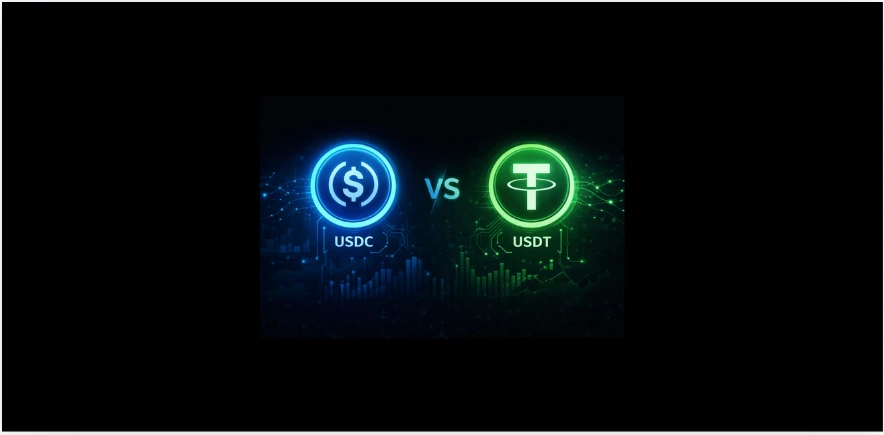
Quick Overview: USDT vs USDC
| Feature | USDT (Tether) | USDC (Circle) |
|---|---|---|
| Issuer | Tether Ltd. | Circle (U.S.-regulated) |
| Regulation | Offshore structure | U.S. regulated |
| Liquidity | Highest globally | High, slightly lower |
| Market Cap | Larger | Smaller |
| Freeze Capability | Yes | Yes |
| Transparency | Quarterly reports | Monthly attestations |
Cost Comparison for Remittances
The stablecoin itself does not determine cost — the network does.
Network Fee Comparison (Average)
| Network | USDT Fee | USDC Fee |
|---|---|---|
| Ethereum | $5–$25 | $5–$25 |
| Tron | $0.50–$2 | Not native |
| Solana | <$0.01 | <$0.01 |
| Arbitrum | <$1 | <$1 |
Key insight:
USDT has dominant liquidity on Tron, which remains one of the cheapest networks globally for remittances.
USDC is stronger on Ethereum and Layer 2 ecosystems.
For ultra-low-cost remittances, USDT on Tron often wins.
Liquidity in Destination Countries
This is where things become practical.
In Latin America, Africa, and parts of Asia:
- P2P markets overwhelmingly favor USDT.
- Informal OTC desks prefer USDT.
- Exchanges list both, but USDT pairs are deeper.
If your recipient relies on local P2P conversion, USDT usually provides smoother exit liquidity.
In contrast, in more regulated environments (Europe, U.S., Canada):
- USDC is often perceived as more compliant.
- Institutional desks favor USDC.
So geography matters.
Safety: Regulatory Risk vs Structural Risk
This is the core question: which is safer?
USDC Safety Profile
- Issued by a U.S.-regulated entity (Circle)
- Monthly reserve attestations
- Strong compliance framework
- Greater alignment with U.S. regulators
Risk:
- Greater exposure to U.S. regulatory intervention
USDT Safety Profile
- Largest stablecoin globally
- Massive liquidity dominance
- Operates under offshore structure
- Historically more controversial transparency discussions
Risk:
- Regulatory pressure outside the U.S.
- Centralized issuer freeze capability
Neither is “risk-free.”
Both can freeze addresses.
Both depend on issuer solvency.
Both rely on centralized reserve structures.
Simulation: $2,000 Monthly Remittance from the U.S.
Assume 12 transfers per year.
Using USDT (Tron)
- Average fee: $1
- Annual total: ~$12
Using USDC (Ethereum)
- Average fee: $12
- Annual total: ~$144
Using USDC (Arbitrum)
- Average fee: ~$0.70
- Annual total: ~$8
Conclusion:
The network choice matters more than the token choice.
Liquidity Stress Scenario
Imagine sending $25,000 during high volatility.
USDT:
- Higher global liquidity
- Deeper order books in emerging markets
USDC:
- Stronger institutional confidence
- Sometimes slightly tighter spreads on regulated exchanges
In crisis-like scenarios, USDT’s size gives it broader accessibility in less regulated markets.
⚡ Strategic Insight Box
━━━━━━━━━━━━━━━━━━
Which One Should You Use?
If your priority is:
Lowest fees → USDT on Tron or Solana
Regulatory comfort → USDC
Maximum emerging market liquidity → USDT
Institutional compliance → USDC
For full remittance mechanics guide:
👉 https://damadefi.com/how-to-send-money-abroad-with-usdt/
For the macro infrastructure thesis:
👉 https://damadefi.com/instant-global-payments-usdt-usdc-and-pyusd/
━━━━━━━━━━━━━━━━━━
When USDC Might Be Better
- You operate inside U.S. compliance-heavy structures
- You are an institutional sender
- You prioritize transparency reporting
- You transact mostly within U.S. exchanges
When USDT Might Be Better
- You send money to emerging markets
- Recipient uses P2P desks
- You need deepest global liquidity
- You prioritize availability over regulation optics
Final Structural Reality
For remittances:
- Cost = Network choice
- Liquidity = Market adoption
- Safety = Issuer trust + regulatory landscape
The winner is contextual.
For most cross-border remittance flows into developing markets, USDT currently has a slight practical advantage.
For U.S.-regulated business environments, USDC may offer psychological and compliance comfort.
FAQ – 30 Questions About USDC vs USDT for Remittances
1. Is USDC safer than USDT?
USDC is issued by a U.S.-regulated entity with monthly attestations, which many consider more transparent. USDT has larger liquidity and longer global adoption history.
2. Is USDT riskier?
It carries issuer risk like all centralized stablecoins but dominates global liquidity.
3. Which one freezes addresses more?
Both have freeze capabilities. Enforcement depends on compliance situations.
4. Which is cheaper?
Depends on network, not token.
5. Which is better for Latin America?
Often USDT due to P2P liquidity.
6. Which is better for U.S. businesses?
Often USDC due to regulatory alignment.
7. Can both lose their peg?
In extreme stress, yes, though historically both have maintained peg with minor deviations.
8. Are reserves audited?
USDC publishes monthly attestations. USDT publishes periodic reports.
9. Which has higher market cap?
USDT.
10. Is USDC fully backed?
Circle states it is backed by cash and short-term Treasuries.
11. Is USDT fully backed?
Tether claims full backing with diversified reserves.
12. Which one is accepted globally?
USDT has wider informal adoption.
13. Can governments shut them down?
They regulate issuers and exchanges, not blockchain itself.
14. Which has lower volatility?
Both are designed to maintain $1 peg.
15. Is Ethereum too expensive?
Often yes for small transfers.
16. Is Tron secure?
It is widely used but more centralized than Ethereum.
17. Can I switch between them easily?
Yes via exchanges.
18. Are they DeFi compatible?
Both are widely used in DeFi.
19. Which has deeper liquidity pools?
USDT globally.
20. Are there tax differences?
Tax treatment depends on capital gains, not token brand.
21. Which is more transparent?
USDC generally publishes more frequent reporting.
22. Which is older?
USDT launched earlier.
23. Can banks block purchases?
Yes at exchange level.
24. Which is more decentralized?
Neither is decentralized; both are centrally issued.
25. Is there counterparty risk?
Yes for both.
26. Which is more stable historically?
Both have maintained peg with minor stress events.
27. Is USDC better during U.S. regulation tightening?
Possibly, due to domestic compliance alignment.
28. Is USDT better in emerging markets?
Often due to liquidity dominance.
29. Can either replace SWIFT?
They already function as settlement alternatives in many contexts.
30. Which should beginners choose?
Choose based on recipient liquidity and network cost efficiency.
📌 Part of the Instant Global Payments cluster
Core infrastructure overview:
👉 https://damadefi.com/instant-global-payments-usdt-usdc-and-pyusd/
Step-by-step sending guide:
👉 https://damadefi.com/how-to-send-money-abroad-with-usdt/
Banking comparison breakdown:
👉 https://damadefi.com/swift-vs-stablecoins-usdt-vs-usdc/
Why This Comparison Matters for U.S. Senders
If you live in the United States and regularly send money abroad — to family, contractors, suppliers, or remote teams — choosing the wrong stablecoin can mean:
- Higher network costs
- Lower liquidity in the destination country
- Increased freeze risk
- Regulatory exposure differences
For small transfers, differences are minor.
For recurring or high-volume transfers, they become strategic.
Quick Overview: USDT vs USDC
| Feature | USDT (Tether) | USDC (Circle) |
|---|---|---|
| Issuer | Tether Ltd. | Circle (U.S.-regulated) |
| Regulation | Offshore structure | U.S. regulated |
| Liquidity | Highest globally | High, slightly lower |
| Market Cap | Larger | Smaller |
| Freeze Capability | Yes | Yes |
| Transparency | Quarterly reports | Monthly attestations |
Cost Comparison for Remittances
The stablecoin itself does not determine cost — the network does.
Network Fee Comparison (Average)
| Network | USDT Fee | USDC Fee |
|---|---|---|
| Ethereum | $5–$25 | $5–$25 |
| Tron | $0.50–$2 | Not native |
| Solana | <$0.01 | <$0.01 |
| Arbitrum | <$1 | <$1 |
Key insight:
USDT has dominant liquidity on Tron, which remains one of the cheapest networks globally for remittances.
USDC is stronger on Ethereum and Layer 2 ecosystems.
For ultra-low-cost remittances, USDT on Tron often wins.
Liquidity in Destination Countries
This is where things become practical.
In Latin America, Africa, and parts of Asia:
- P2P markets overwhelmingly favor USDT.
- Informal OTC desks prefer USDT.
- Exchanges list both, but USDT pairs are deeper.
If your recipient relies on local P2P conversion, USDT usually provides smoother exit liquidity.
In contrast, in more regulated environments (Europe, U.S., Canada):
- USDC is often perceived as more compliant.
- Institutional desks favor USDC.
So geography matters.
Safety: Regulatory Risk vs Structural Risk
This is the core question: which is safer?
USDC Safety Profile
- Issued by a U.S.-regulated entity (Circle)
- Monthly reserve attestations
- Strong compliance framework
- Greater alignment with U.S. regulators
Risk:
- Greater exposure to U.S. regulatory intervention
USDT Safety Profile
- Largest stablecoin globally
- Massive liquidity dominance
- Operates under offshore structure
- Historically more controversial transparency discussions
Risk:
- Regulatory pressure outside the U.S.
- Centralized issuer freeze capability
Neither is “risk-free.”
Both can freeze addresses.
Both depend on issuer solvency.
Both rely on centralized reserve structures.
Simulation: $2,000 Monthly Remittance from the U.S.
Assume 12 transfers per year.
Using USDT (Tron)
- Average fee: $1
- Annual total: ~$12
Using USDC (Ethereum)
- Average fee: $12
- Annual total: ~$144
Using USDC (Arbitrum)
- Average fee: ~$0.70
- Annual total: ~$8
Conclusion:
The network choice matters more than the token choice.
Liquidity Stress Scenario
Imagine sending $25,000 during high volatility.
USDT:
- Higher global liquidity
- Deeper order books in emerging markets
USDC:
- Stronger institutional confidence
- Sometimes slightly tighter spreads on regulated exchanges
In crisis-like scenarios, USDT’s size gives it broader accessibility in less regulated markets.
⚡ Strategic Insight Box
━━━━━━━━━━━━━━━━━━
Which One Should You Use?
If your priority is:
Lowest fees → USDT on Tron or Solana
Regulatory comfort → USDC
Maximum emerging market liquidity → USDT
Institutional compliance → USDC
For full remittance mechanics guide:
👉 https://damadefi.com/how-to-send-money-abroad-with-usdt/
For the macro infrastructure thesis:
👉 https://damadefi.com/instant-global-payments-usdt-usdc-and-pyusd/
━━━━━━━━━━━━━━━━━━
When USDC Might Be Better
- You operate inside U.S. compliance-heavy structures
- You are an institutional sender
- You prioritize transparency reporting
- You transact mostly within U.S. exchanges
When USDT Might Be Better
- You send money to emerging markets
- Recipient uses P2P desks
- You need deepest global liquidity
- You prioritize availability over regulation optics
Final Structural Reality
For remittances:
- Cost = Network choice
- Liquidity = Market adoption
- Safety = Issuer trust + regulatory landscape
The winner is contextual.
For most cross-border remittance flows into developing markets, USDT currently has a slight practical advantage.
For U.S.-regulated business environments, USDC may offer psychological and compliance comfort.
FAQ – 30 Questions About USDC vs USDT for Remittances
1. Is USDC safer than USDT?
USDC is issued by a U.S.-regulated entity with monthly attestations, which many consider more transparent. USDT has larger liquidity and longer global adoption history.
2. Is USDT riskier?
It carries issuer risk like all centralized stablecoins but dominates global liquidity.
3. Which one freezes addresses more?
Both have freeze capabilities. Enforcement depends on compliance situations.
4. Which is cheaper?
Depends on network, not token.
5. Which is better for Latin America?
Often USDT due to P2P liquidity.
6. Which is better for U.S. businesses?
Often USDC due to regulatory alignment.
7. Can both lose their peg?
In extreme stress, yes, though historically both have maintained peg with minor deviations.
8. Are reserves audited?
USDC publishes monthly attestations. USDT publishes periodic reports.
9. Which has higher market cap?
USDT.
10. Is USDC fully backed?
Circle states it is backed by cash and short-term Treasuries.
11. Is USDT fully backed?
Tether claims full backing with diversified reserves.
12. Which one is accepted globally?
USDT has wider informal adoption.
13. Can governments shut them down?
They regulate issuers and exchanges, not blockchain itself.
14. Which has lower volatility?
Both are designed to maintain $1 peg.
15. Is Ethereum too expensive?
Often yes for small transfers.
16. Is Tron secure?
It is widely used but more centralized than Ethereum.
17. Can I switch between them easily?
Yes via exchanges.
18. Are they DeFi compatible?
Both are widely used in DeFi.
19. Which has deeper liquidity pools?
USDT globally.
20. Are there tax differences?
Tax treatment depends on capital gains, not token brand.
21. Which is more transparent?
USDC generally publishes more frequent reporting.
22. Which is older?
USDT launched earlier.
23. Can banks block purchases?
Yes at exchange level.
24. Which is more decentralized?
Neither is decentralized; both are centrally issued.
25. Is there counterparty risk?
Yes for both.
26. Which is more stable historically?
Both have maintained peg with minor stress events.
27. Is USDC better during U.S. regulation tightening?
Possibly, due to domestic compliance alignment.
28. Is USDT better in emerging markets?
Often due to liquidity dominance.
29. Can either replace SWIFT?
They already function as settlement alternatives in many contexts.
30. Which should beginners choose?
Choose based on recipient liquidity and network cost efficiency.
📌 Part of the Instant Global Payments cluster
Core infrastructure overview:
👉 https://damadefi.com/instant-global-payments-usdt-usdc-and-pyusd/
Step-by-step sending guide:
👉 https://damadefi.com/how-to-send-money-abroad-with-usdt/
Banking comparison breakdown:
👉 https://damadefi.com/swift-vs-stablecoins-usdt-vs-usdc/