
The Truth No One Explains Clearly
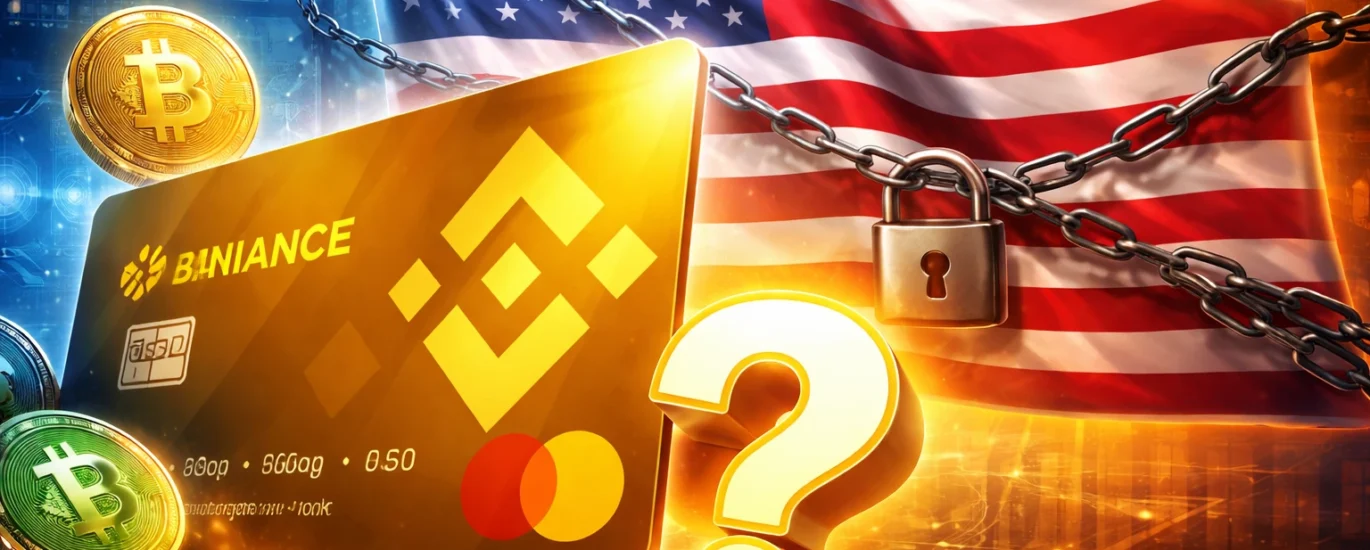
Crypto cards are not exactly banned in the United States. What’s happening is far more complex—and far more strategic.
In 2026, the U.S. became one of the most restrictive environments for crypto-linked payment products. Not because crypto itself is illegal, but because the bridge between crypto and traditional finance (Visa/Mastercard rails) is under heavy regulatory pressure.
So when users say “crypto cards don’t work in the U.S.”, what they’re really experiencing is:
- Regulatory friction
- Compliance shutdowns
- Issuer withdrawals
- Payment network risk controls
And all of that creates the illusion of a “ban.”
What Actually Changed (2024 → 2026)
Picture the timeline like a tightening corridor.
At first, exchanges could freely partner with card issuers. Then came stricter rules:
- KYC/AML requirements intensified
- Stablecoin scrutiny increased
- Payment processors started limiting exposure
- Banks became risk-averse
By 2026, the key shift is this:
👉 Issuers and payment networks (not exchanges) are pulling back
That’s the real story.
🔎 Confused about crypto cards in 2026? Start here
- 👉 Pillar Guide:
Best Crypto Debit Cards in 2026 (Full Comparison)
https://damadefi.com/crypto-debit-cards-usdt-usdc-bitcoin-visa-mastercard/ - 👉 Most important insight right now (US restrictions):
Why Binance Card Doesn’t Work in the US
https://damadefi.com/why-binance-card-doesnt-work-in-the-us/
Why Binance Card Doesn’t Work in the US
Let’s address the elephant in the room.
The Binance Card is one of the most searched crypto payment products globally. But in the U.S., it simply doesn’t operate.
Not because Binance can’t build it.
But because:
- U.S. regulators require strict custody + reporting compliance
- Binance.US operates under a different structure than global Binance
- Card issuers avoid regulatory exposure
- Visa/Mastercard partnerships are region-specific
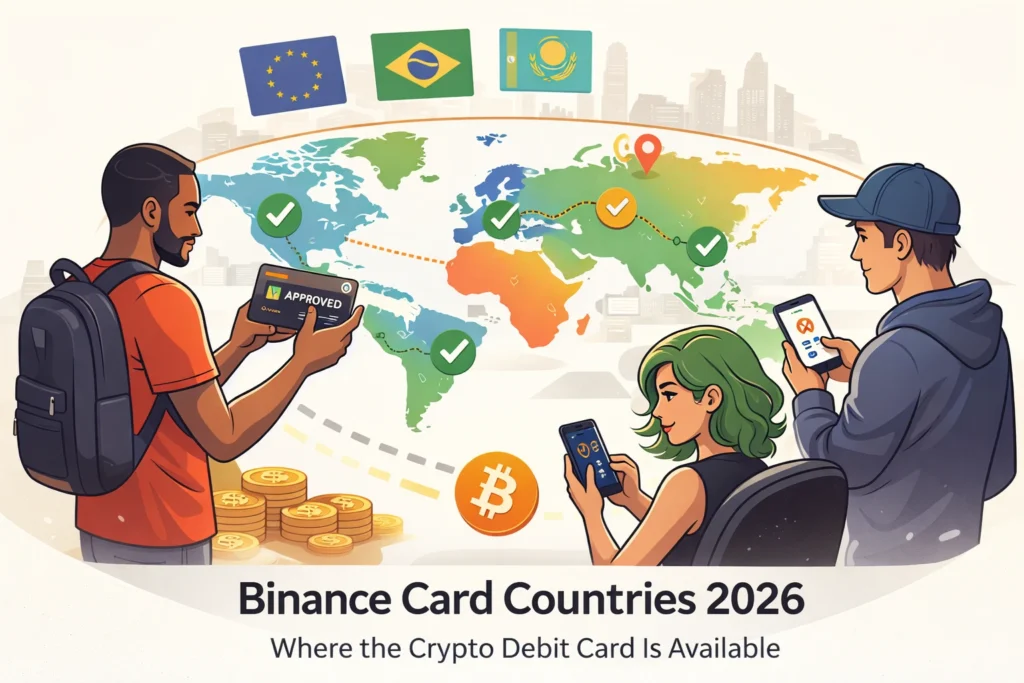
👉 Result: No issuance pipeline = no card
⚠️ This is the article everyone is reading right now
👉 Why Binance Card Doesn’t Work in the US (Shocking Truth 2026)
https://damadefi.com/why-binance-card-doesnt-work-in-the-us/
💡 If you read only one article in this cluster — read this one.
The Hidden Layer: Payment Rails Control Everything
Most people think crypto cards are “crypto products.”
They’re not.
They are:
Traditional debit cards powered by crypto liquidation behind the scenes
When you spend:
- Crypto is converted (USDT, USDC, BTC → fiat)
- The card network (Visa/Mastercard) processes the payment
- The merchant receives fiat
So if Visa/Mastercard or issuing banks step back…
👉 The entire product collapses.
💳 Want to understand how crypto cards really work?
- 👉 Fees, spreads and hidden costs:
https://damadefi.com/binance-card-fees-2026-binance-card-fees-2026/ - 👉 ATM withdrawals and real cash access:
https://damadefi.com/binance-card-atm-withdrawal-2026-costs/ - 👉 Cashback reality (what you actually earn):
https://damadefi.com/binance-card-cashback-2026/
Why Europe and Asia Still Have Crypto Cards
Now imagine a user in Portugal or Singapore.
Same Binance app. Same wallet.
But suddenly—the card is available.
Why?
- More flexible regulatory frameworks
- E-money institutions support crypto integration
- Lower enforcement pressure on issuers
- Clearer licensing pathways
👉 Crypto cards thrive where regulation is defined—not ambiguous
🚀 Explore the Full Crypto Card Ecosystem (Cluster Navigation)
Start here (Pillar):
👉 https://damadefi.com/crypto-debit-cards-usdt-usdc-bitcoin-visa-mastercard/
Deep dives:
- 👉 Binance Card Review 2026: Fees, Cashback and Hidden Costs
- 👉 OKX Card Review: USDT Spending and Real Fees
- 👉 Crypto.com Card Review: Is the Cashback Still Worth It?
Advanced topics:
- 👉 Binance Card Fees 2026: Hidden Costs, FX Spreads and ATM Charges
- 👉 Binance Card Limits 2026: Daily Spending, ATM Withdrawal and Cashback Caps
- 👉 Binance Card Countries 2026: Where the Crypto Debit Card Is Available
The “Soft Ban” Nobody Talks About
Here’s the real insight most blogs miss:
The U.S. didn’t ban crypto cards.
It created conditions where:
- Issuers don’t want the risk
- Networks limit exposure
- Exchanges segment operations
This is called a “soft ban” through infrastructure pressure.
And it’s much more powerful than a direct prohibition.
Stablecoins Made Things Even More Complicated
You’d expect USDT and USDC to simplify everything.
They didn’t.
In fact:
- Stablecoins are under regulatory microscope
- Questions about reserves and backing persist
- Payment networks treat them as higher risk
So even though they are perfect for payments…
👉 They are harder to integrate legally in the U.S.
What U.S. Users Are Doing Instead
Now imagine a user adapting.
Instead of a crypto card, they:
- Use exchanges to convert to fiat manually
- Send USDT via TRON for cheap transfers
- Use neobanks or intermediaries
- Spend through indirect off-ramps
It’s less elegant. But it works.
The Future: Will Crypto Cards Return to the US?
Yes—but not the way you expect.
The next wave will likely come through:
- Regulated stablecoin frameworks
- Bank-issued crypto cards
- Fully compliant custodial models
- CBDC-integrated payment systems
👉 In other words: less decentralization, more control
Strategic Insight (Dama DeFi Angle)
If you zoom out, this is not a problem.
It’s a signal.
Where friction exists, opportunity follows.
- Remittances via USDT are exploding
- TRON dominance in transfers keeps growing
- Cross-border payments are being rebuilt
👉 The U.S. is slowing retail access—but accelerating institutional structure
FAQ — 30 Questions About Crypto Cards in the US (2026)
1. Are crypto cards illegal in the US?
No. They are not illegal, but heavily restricted due to regulatory and issuer limitations.
2. Why can’t I get a Binance Card in the US?
Because Binance.US lacks issuing partnerships compliant with U.S. regulations.
3. Is there any crypto debit card available in the US?
Some limited options exist, but far fewer than in Europe or Asia.
4. Did the US government ban crypto cards?
No direct ban exists—restrictions come from regulatory pressure.
5. What is a “soft ban” in crypto?
Indirect restriction through infrastructure limitations like banking and payment networks.
6. Do Visa and Mastercard support crypto cards?
Yes, but selectively depending on region and compliance.
7. Why do crypto cards work in Europe?
Because of clearer regulatory frameworks and licensing systems.
8. Can I use USDT with a card in the US?
Not directly via most crypto cards.
9. Is USDC safer for compliance?
Generally yes, but still under regulatory scrutiny.
10. What happens when I use a crypto card?
Your crypto is converted to fiat at the moment of purchase.
11. Are crypto cards custodial?
Yes, most require custody through the issuing platform.
12. Can I withdraw cash from crypto cards?
In supported regions, yes—via ATM.
13. Why are banks avoiding crypto cards?
Risk, compliance costs, and regulatory uncertainty.
14. Will Binance Card come back to the US?
Possible, but only under stricter regulatory frameworks.
15. Are crypto cards anonymous?
No, they require full KYC.
16. What fees do crypto cards have?
FX spreads, conversion fees, ATM fees, and sometimes inactivity fees.
17. Are crypto cashback rewards still worth it?
Depends on usage and fee structure.
18. Can I link crypto cards to Apple Pay?
In supported regions, yes.
19. Do crypto cards trigger taxes?
Yes, crypto-to-fiat conversion may be taxable.
20. Why is TRON popular for USDT transfers?
Low fees and fast transactions.
21. Is using crypto cards safer than banks?
Different risk model—depends on custody and platform.
22. Can I bypass US restrictions using VPN?
No—KYC verification prevents this.
23. What is the biggest risk of crypto cards?
Regulatory shutdown or issuer withdrawal.
24. Are crypto cards decentralized?
No, they rely on centralized infrastructure.
25. What is the best alternative in the US?
Manual off-ramps and stablecoin transfers.
26. Are prepaid crypto cards different?
Yes, but still regulated similarly.
27. Can businesses use crypto cards in the US?
Very limited availability.
28. Will regulation improve clarity?
Likely, but gradually.
29. Are crypto cards dying?
No—they are evolving regionally.
30. What’s the biggest takeaway?
Crypto cards are not banned—the system around them is constrained.