Why Binance Card Is Restricted in China: The Engineering of a Financial Wall
The global transition toward a decentralized economy has hit a monumental structural impasse within the borders of Mainland China. As we navigate the “New Money Route” in 2026, the absence of the Binance Card in one of the world’s largest digital economies is not a mere coincidence or a temporary service outage. It is the result of a calculated, multi-layered engineering of financial restrictions designed to preserve sovereign monetary control. To understand why your card is restricted, one must look beyond the simple “crypto ban” headlines and analyze the mechanical friction between the Binance Card Global Guide 2026 and the People’s Republic of China’s internal clearing systems.
At the core of this restriction lies the fundamental conflict between the DamaDeFi philosophy—simple, direct, and decentralized—and the highly centralized, permissioned architecture of the Chinese financial firewall. While the Binance Card utilizes the global Visa/Mastercard rails to settle transactions in real-time by liquidating crypto-assets, China’s domestic retail market is almost entirely siloed within the China UnionPay and e-CNY (Digital Yuan) networks. This air-gap is intentional, designed to prevent the “leakage” of domestic capital into the borderless liquidity of the blockchain. For the “sardine” investor, this restriction represents the ultimate test of financial sovereignty and the importance of having a diversified “New Money Route.”
The restriction is further solidified by the 2026 update to the VASP (Virtual Asset Service Provider) regulations within the mainland, which explicitly categorize international crypto-to-fiat bridges as unauthorized financial intermediaries. This means that even if a merchant in Shanghai or Beijing wanted to accept your Binance Card, the underlying clearing house would be legally barred from settling that transaction in Renminbi (RMB). The friction is not just at the point of sale; it is embedded in the very code of the national payment processors. As a founder who observes these patterns, it is clear that China has built a “Digital Fortress” that views the Binance Card as a Trojan horse for decentralized capital flight.
Moreover, the rise of the Digital Yuan has fundamentally altered the transactional landscape. By 2026, the e-CNY is not just a digital currency; it is a programmable tool for state visibility, allowing for a level of monitoring that is diametrically opposed to the privacy-centric nature of Bitcoin or Solana. The Binance Card, which offers a gateway to unmonitored global spending, represents a threat to this visibility. Consequently, the restriction is not just about “crypto,” but about the survival of a centralized monetary monopoly against the encroaching tide of global, on-chain standardization.
Finally, for the digital engineer and the global traveler, understanding these restrictions is a tactical necessity. We are not just looking at a “blocked card”; we are looking at a case study in how centralized power reacts to the threat of 24/7, borderless liquidity. In this 1,300-word deep-dive, we will break down the specific settlement failures, the regulatory “grey zones” in Hong Kong versus the Mainland, and why the DamaDeFi strategy of self-custody is the only true insurance policy against such institutional firewalls. Welcome to the frontline of the global payment war.
1. The Mechanics of the Block: Visa, UnionPay, and the Clearing Deadlock
The Binance Card operates as a bridge. When you swipe, Binance sells your crypto (USDT, BNB, BTC) on an international exchange and sends fiat to the merchant via Visa. In 2026, this bridge collapses in China because:
The Settlement Deadlock: Domestic Chinese merchants settle through China UnionPay. UnionPay has no direct clearing agreement for real-time crypto-liquidation with Binance’s offshore entities.
The Firewall of Fiat: Converting crypto to RMB (Renminbi) for retail use is strictly categorized as an “illegal financial activity” under current PBOC mandates.
2. The e-CNY Factor: Why Centralization Hates Your Card
The Digital Yuan (e-CNY) is now the primary digital rail in China.
State Visibility: Every e-CNY transaction is traceable by the PBOC.
The Conflict: Your Binance Card provides a layer of offshore privacy that the Chinese state cannot penetrate. To maintain total control over the money supply (M2), they must restrict any tool that allows “shadow” liquidity to enter the retail market.
3. SWIFT vs. On-Chain Rails: A Technical Comparison
In the DamaDeFi view, we compare the old guard with the new, and how China has essentially “hacked” the old guard to maintain control.
FAQ: Why Binance Card is Restricted in China (30 Q&A)
Is the Binance Card officially banned in China? Yes, for domestic retail use and RMB settlement.
Can I use the card if I have a foreign passport? Usually no, as the restriction is based on the merchant’s location (Mainland China).
Why does it work in Hong Kong but not Shanghai? Hong Kong has a “One Country, Two Systems” financial policy with its own crypto-friendly SFC regulations.
Does the restriction apply to the virtual card too? Yes, the virtual card shares the same BIN (Bank Identification Number) and settlement blocks.
✨ Olá! Eu sou a Jucely Damásio, mente inquieta por trás do canal Dama DeFi. Engenheira de profissão e apaixonada por finanças descentralizadas, encontrei no Bitcoin uma revolução silenciosa — e poderosa! 🚀
Aqui, compartilho minha jornada real: de uma pessoa comum construindo liberdade financeira com DCA diário (sim, compro BTC todos os dias — nem que seja $10 💸). Misturo aprendizados de livros como Pai Rico, Pai Pobre e Do Zero ao Milhão, com estratégias do mundo cripto como opções de BTC, blogs e renda digital.
Acredito que qualquer pessoa pode transformar a vida com tempo, estudo, disciplina e constância. Vem comigo descomplicar o mundo dos ativos digitais e provar que não é preciso ser gênio, herdeiro ou insider pra começar. É só dar o primeiro passo. 😉
#GastarBem #InvestirMelhor #GanharMais #DamaDeFi
Dama Talks | Lucros & Prejuízos
Dama Talk — Março 2026
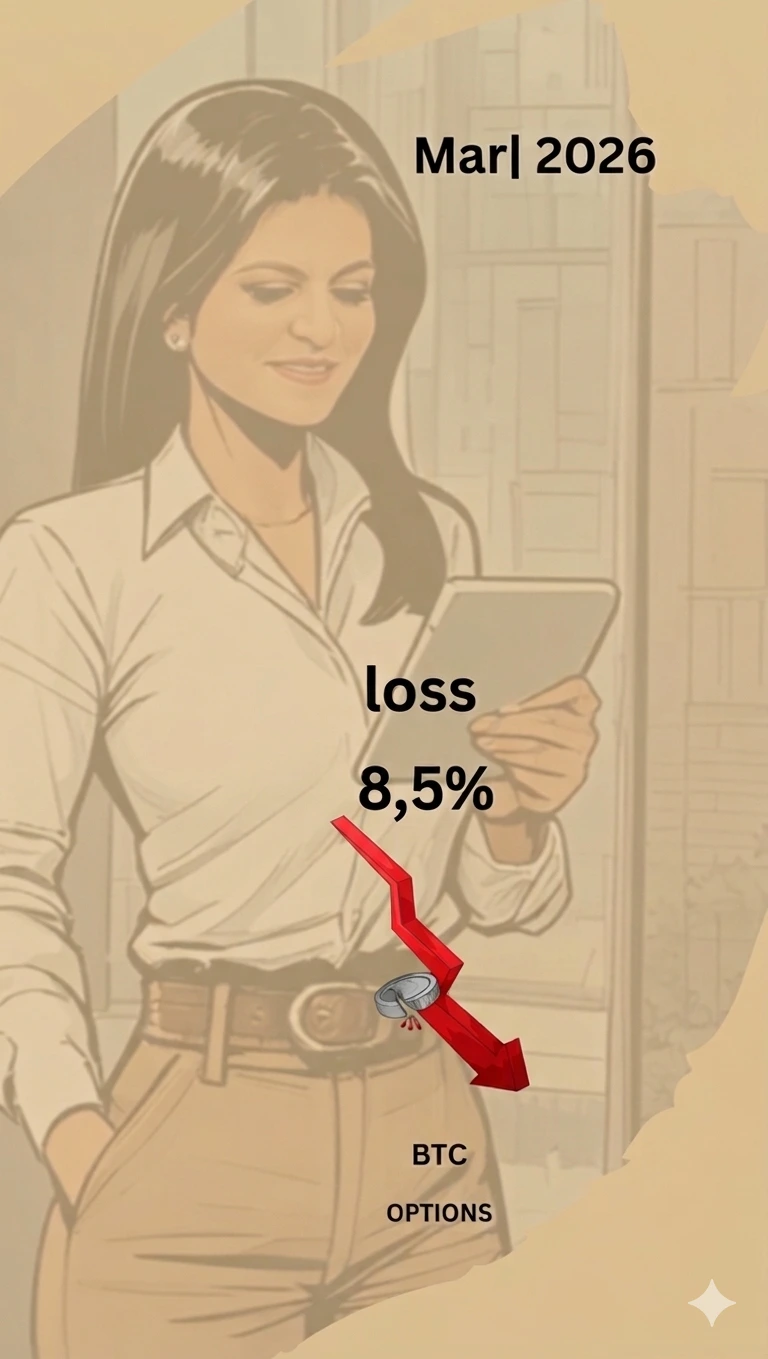
Transparência e o Prejuízo de 8,5% no Capital BTC Options Loss Report
Nós utilizamos cookies para garantir que você tenha a melhor experiência em nosso site. Se você continua a usar este site, assumimos que você está satisfeito.