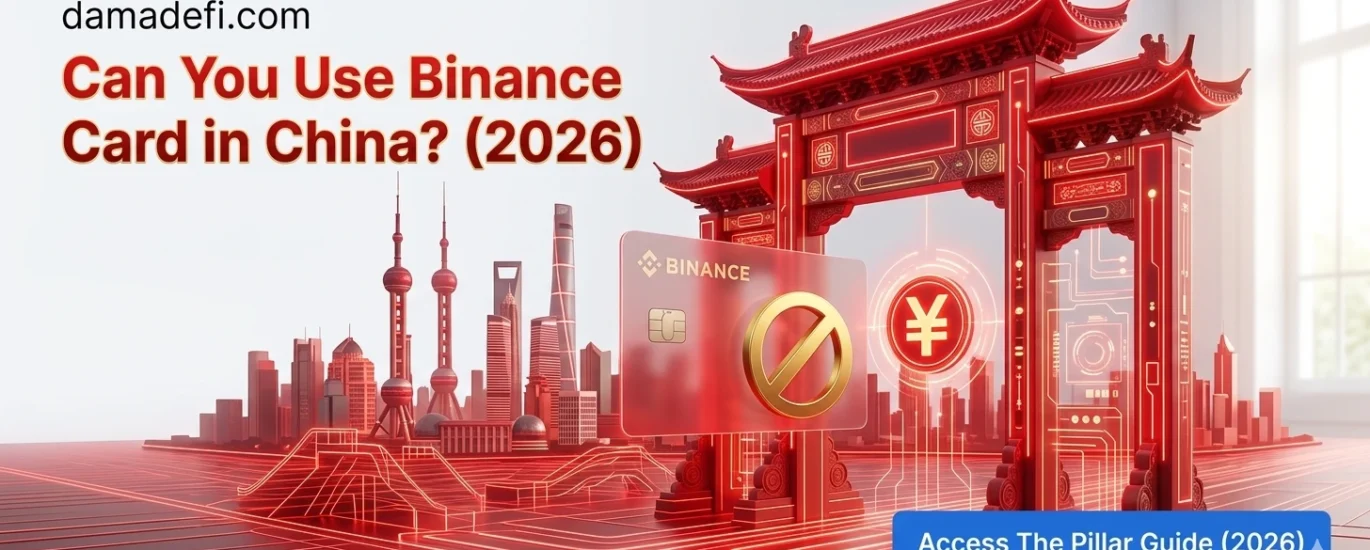
Can You Use Binance Card in China? (2026 Continental Access Guide)
For years, the crypto world has looked at the People’s Republic of China with a mixture of awe and caution. As we stand in 2026, the question for international travelers and local crypto enthusiasts remains critical: “Is the Binance Card functional on the Chinese mainland?” The answer is a multifaceted no, rooted deeply in the country’s unique financial sovereignty.
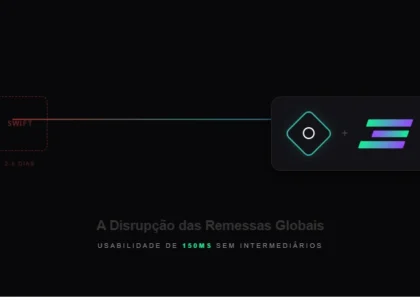
Since the seismic regulatory shifts of 2021, when the People’s Bank of China (PBOC) declared all cryptocurrency transactions illegal, the ecosystem for international crypto-linked cards has essentially been sealed off. While China pushes the boundaries of a cashless, digital-yuan economy, it has simultaneously constructed an impenetrable wall against decentralized fiat bridges.
Understanding the “Why” behind this total block is essential for any modern digital nomad. In this guide, we break down the insurmountable regulatory barriers and explain why even the most sophisticated crypto payment systems cannot penetrate the Great Firewall.
Most POS terminals and merchants are not connected to the international rails required to settle a crypto card.
UnionPay Integration
❌ Banned
The local UnionPay system does not support decentralized asset settlement.
Digital Yuan (e-CNY)
✅ Active (State-controlled)
The only state-authorized digital currency for domestic use.
The Great Firewall Meets Crypto Payment Rails
The Binance Card is fundamentally a bridge: it converts your cryptocurrency (like USDT, BNB, or BTC) into a fiat currency (like EUR, USD, or JPY) at the precise moment you swipe it. To work, this process requires that:
A payment processor (Visa/Mastercard) can communicate instantly with your Binance wallet.
The local merchant’s terminal can accept that card.
The local bank can clear the transaction in local currency (RMB/CNY).
In Mainland China, these three steps are legally disconnected. The PBOC considers any bridge from a private decentralized asset to the Renminbi as an unlawful interference with its monetary policy. Furthermore, since private crypto-to-fiat conversion platforms are banned, there is no authorized liquidity pool within China to support a Binance Card.
The Monopoly of e-CNY and Weixin Pay
China is a world leader in digital payments. Over 90% of retail transactions are conducted through WeChat Pay (Weixin) and Alipay. Crucially, these systems are not just payment apps; they are strictly regulated interfaces integrated with the local banking system.
The only digital asset that is legally sanctioned for use as money is the Central Bank Digital Currency (CBDC), also known as the Digital Yuan (e-CNY). The e-CNY is designed to replace physical cash. Its integration into WeChat Pay and Alipay ensures that the state has full visibility and control over all digital circulation. A Binance Card represents a “shadow” system that directly competes with this control.
💡 Related Insight (CTA Clean)
Binance Card Global Guide 2026: Where It Works and Where It Doesn’t
“Simple, direct, and decentralized.” [Access the Pillar Content]
Binance Card Global Guide 2026: Where It Works and Where It Doesn’t
Alternatives and Workarounds for 2026
If you are traveling to China in 2026, relying on a Binance Card is a guaranteed failure point. Here are the necessary steps to ensure you can function in a nearly cashless society:
Get a Foreigner-Friendly Alipay/WeChat Pay Account: By 2026, it is simpler for foreign passport holders to link an international credit card to their local Chinese payment apps for low-value transactions.
Use OTC P2P Outside China: Convert your crypto to your international fiat currency (like USD or EUR) before you enter China, and then rely on your international bank card for Alipay linkage.
Hold State-Sanctioned e-CNY: If available for foreigners, acquiring and using e-CNY is the most seamless path.
While “Simple, direct, and decentralized” is our goal at DamaDeFi, in China, the reality is Complex, State-controlled, and Centralized.
The Founder’s Paradox — Born in China, Built for the World
To understand why Binance has a complicated relationship with China, one must look at the man who started it all: Changpeng Zhao, widely known as CZ. His life story is the ultimate blueprint of the “decentralized citizen,” and it explains the very DNA of Binance.
1. The Roots: From Jiangsu to Vancouver
CZ was born in Jiangsu, China, in 1977. His father was a professor who was temporarily exiled during the Cultural Revolution. In the late 1980s, the family emigrated to Canada, where CZ experienced a radical shift in perspective. He went from a traditional Chinese upbringing to flipping burgers at McDonald’s in Vancouver to pay his bills while studying computer science.
This duality—Chinese discipline and Western digital freedom—is what allowed him to build a bridge between two worlds, even if one of those worlds eventually closed its doors to him.
2. 2017: The 90-Day Miracle and the Great Exodus
Binance was actually founded in Shanghai in July 2017. Within just 90 days, it became the largest crypto exchange in the world. However, the “honeymoon” with China lasted less than three months.
In September 2017, the Chinese government banned ICOs and crypto-to-fiat trading. CZ didn’t hesitate: he moved Binance’s servers and headquarters out of China overnight.
“We don’t want to be in one place; we want to be everywhere and nowhere at the same time.” — This moment birthed the “homeless” exchange model that defined Binance for a decade.
3. The 2026 Reality: A Singaporean at the Helm
As of 2026, the “Chinese connection” is more of a historical legacy than an operational reality. Following CZ’s departure as CEO in late 2023, the leadership shifted to Richard Teng, a Singaporean executive with deep roots in traditional financial regulation (ex-MAS and SGX).
Feature
CZ (Founder)
Richard Teng (Current CEO)
Origin
Chinese-Canadian
Singaporean
Background
High-frequency trading coder
Regulatory & Financial Oversight
Philosophy
Rapid growth / Disruptive
Compliance-first / Institutional
Status 2026
Founder & Visionary (Global)
CEO (Operational & Regulatory)
4. Why this matters for the “Binance Card in China”
The irony is sharp: the most successful entrepreneur of Chinese origin in the 21st century cannot offer his flagship payment product in his own birthplace.
China’s refusal to host the Binance Card is, in part, a statement that no individual or company—regardless of their heritage—is above the sovereign control of the Digital Yuan (e-CNY).
💡 Related Insight
Binance Card Global Guide 2026: Where It Works and Where It Doesn’t
“Simple, direct, and decentralized.” [Read the Pillar Article]
FAQ: Binance Card & China Continental (30 Detailed Q&A)
Can I use a Binance Card issued in Europe while visiting Shanghai in 2026? No, the card will be declined at almost all POS terminals.
Is Binance legal in China? The exchange operates from outside the country, but its localized services are banned within the mainland.
Does Binance US work in China? No.
Can I pay with crypto using WeChat Pay? Only if WeChat integrates with the state-backed e-CNY system, not private cryptos.
What happens if I try a Binance Card transaction at an ATM? The ATM will decline the card.
Does the 2021 crypto ban still apply? Yes, and it has been intensified regarding payment gateways.
Is UnionPay an option for a Binance Card? While UnionPay cards are issued outside China by partners, they are generally not integrated with crypto assets for use within China.
Can I use a VPN to make my card work? No, the VPN will unblock the Binance App on your phone, but it cannot fix the physical lack of a payment rail at the merchant’s POS terminal.
What is e-CNY? It is China’s sovereign digital currency, a stablecoin backed by the state.
Is e-CNY decentralized? No, it is highly centralized.
Do duty-free shops at Chinese airports accept Binance Cards? Very rarely; most duty-free shops are still subject to local regulatory clearing. Success is inconsistent.
Are there any crypto cards available in China? No legal ones.
Why does Hong Kong have different rules? Hong Kong operates under a “One Country, Two Systems” framework, with its own independent financial regulators (SFC). Crypto activity is highly regulated but separate from the mainland ban.
Does the Binance Card work in Hong Kong? Yes, as HK is outside the mainland financial regulatory sphere.
What is the penalty for using crypto in China? The penalties are primarily on institutions and businesses facilitating transactions. Individual users may have their bank accounts frozen.
Can I convert Bitcoin directly to RMB? Only through strictly prohibited OTC/P2P markets, which carry extremely high risks.
Can I use a foreign friend’s Alipay account? This is illegal and risky.
Are hotels in big cities like Beijing a safe bet? No, local 5-star hotels must also comply with PBOC regulations and typically only accept domestic cards or authorized payment apps.
What is the best way to get RMB for a foreigner? Relying on international Visa/Mastercard credit cards linked to WeChat/Alipay for payments.
Can I use Binance.com for P2P trading in China? The website is blocked. While some use VPNs, the domestic bank accounts associated with P2P are often frozen by authorities.
Does Binance have an office in Shanghai? No.
What if my Binance Card is a crypto-linked UnionPay? UnionPay is not a monolith. Cards issued within China do not have crypto features. A crypto-UnionPay issued in, say, Argentina, still faces extreme blockages in the mainland due to settlement laws.
Is the ban strictly enforced? Yes, extremely strictly, primarily via algorithmic monitoring of bank transactions.
Will China ever unban crypto payments? In 2026, there is no official indication of this happening, as it contradicts the e-CNY strategy.
Is it illegal to simply hold crypto in China? Owning crypto is considered a form of property and is not explicitly criminalized, but you cannot legally spend it.
Do crypto mining regions have any special rules? China implemented a total ban on all crypto mining.
Can I buy a digital e-CNY product using BTC? No, state systems do not interact with private digital assets.
Is Binance Pay a different story? No, it is also blocked as a payment interface within China.
Where can I find updates? Check damadefi.com and official PBOC announcements.
Is damadefi.com accessible in China? Only through a VPN.
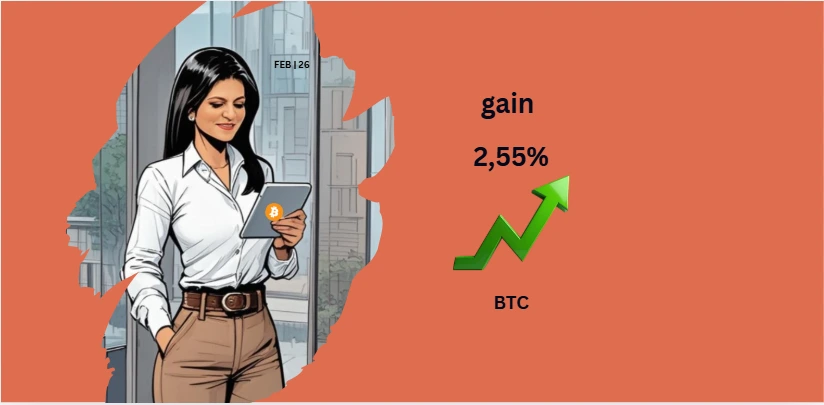
Dama Talk — February 2026: Synthetic Bitcoin Dividends During a Market Correction – Options Trades
✨ Olá! Eu sou a Jucely Damásio, mente inquieta por trás do canal Dama DeFi. Engenheira de profissão e apaixonada por finanças descentralizadas, encontrei no Bitcoin uma revolução silenciosa — e poderosa! 🚀
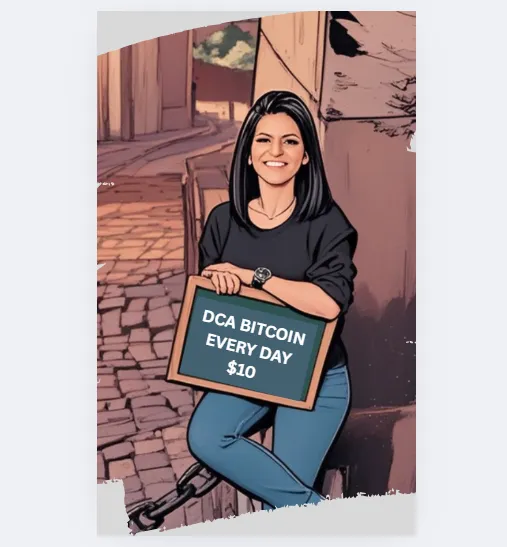
Aqui, compartilho minha jornada real: de uma pessoa comum construindo liberdade financeira com DCA diário (sim, compro BTC todos os dias — nem que seja $10 💸). Misturo aprendizados de livros como Pai Rico, Pai Pobre e Do Zero ao Milhão, com estratégias do mundo cripto como opções de BTC, blogs e renda digital.
Acredito que qualquer pessoa pode transformar a vida com tempo, estudo, disciplina e constância. Vem comigo descomplicar o mundo dos ativos digitais e provar que não é preciso ser gênio, herdeiro ou insider pra começar. É só dar o primeiro passo. 😉
#GastarBem #InvestirMelhor #GanharMais #DamaDeFi
Dama Talks | Lucros & Prejuízos
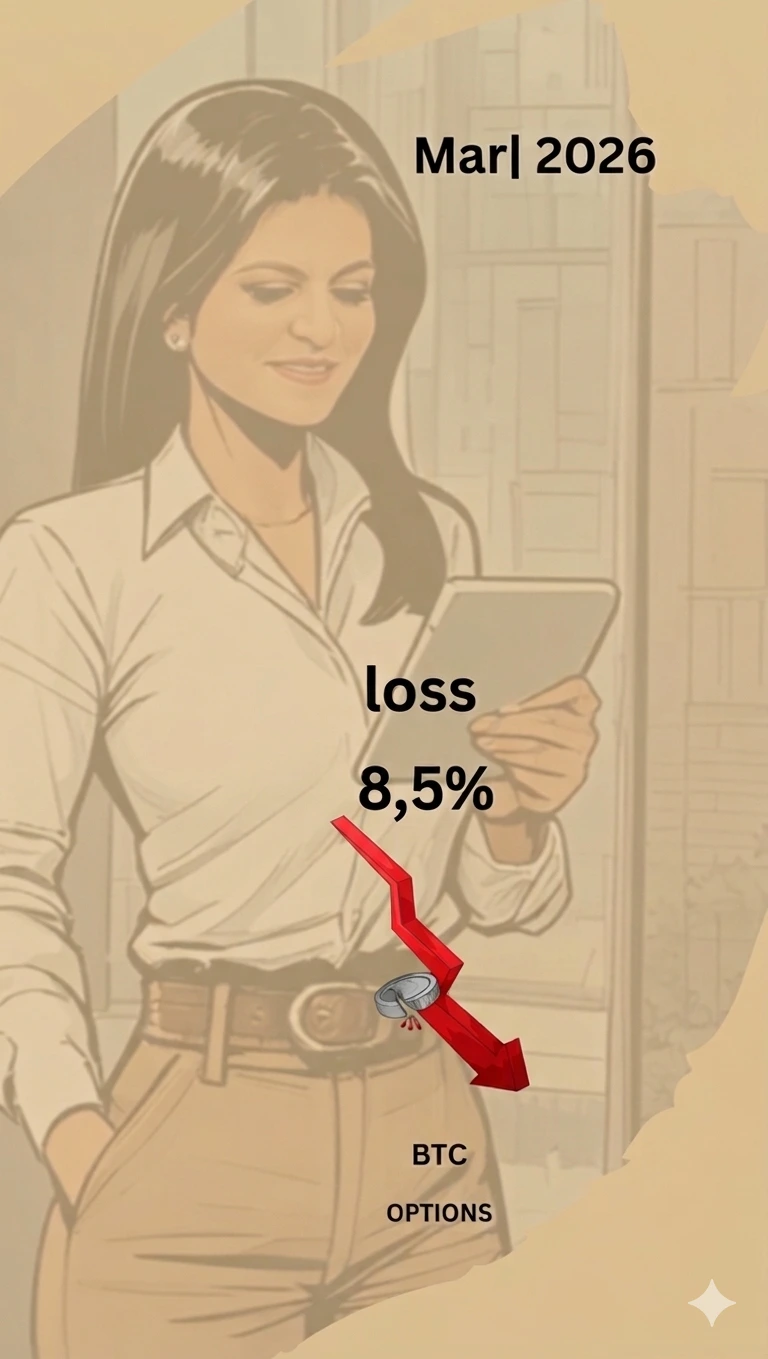
Dama Talk — Março 2026
Transparência e o Prejuízo de 8,5% no Capital BTC Options Loss Report
Nós utilizamos cookies para garantir que você tenha a melhor experiência em nosso site. Se você continua a usar este site, assumimos que você está satisfeito.