
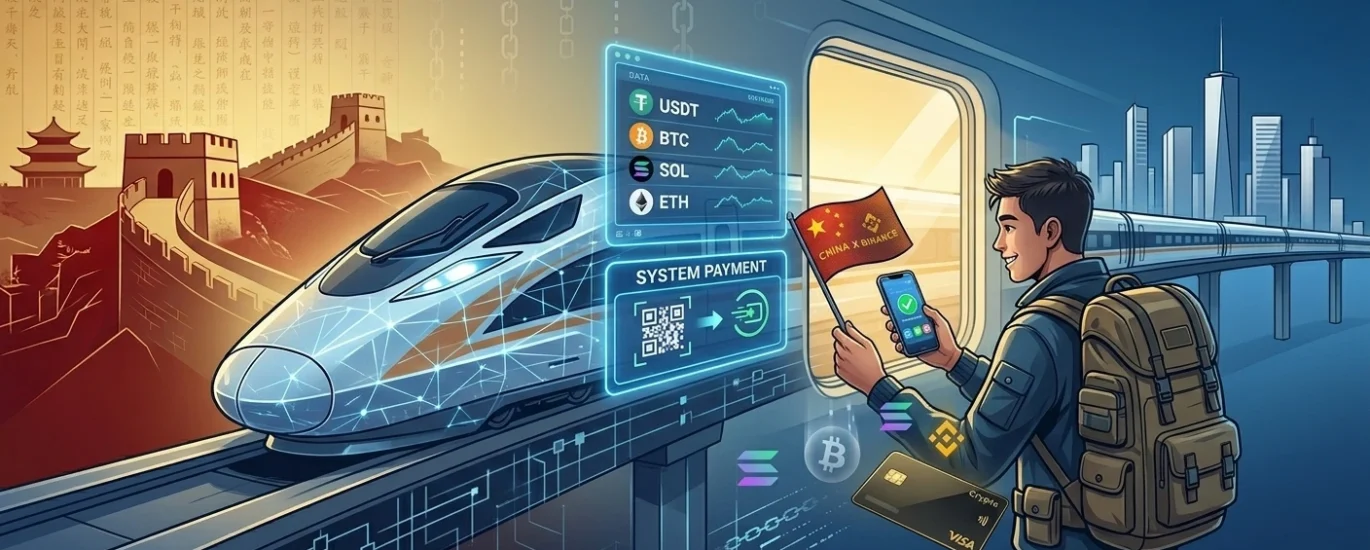
Navigating the labyrinth of digital finance in the East requires more than just technical skill; it requires a strategic map. As we move through 2026, the question for the global traveler and the digital nomad remains: is it possible to bridge the gap between Western decentralized freedom and the “Great Firewall” of Chinese regulation? For those holding the black-and-gold card, the answer is layered in nuance.
The current regulatory climate in China is a paradoxical blend of strict prohibition and pioneering innovation. While the central authorities have historically maintained a firm stance against decentralized trading, the sheer volume of underground liquidity and the rise of the Digital Yuan (e-CNY) have created a unique friction point. For Binance users, understanding this friction is the difference between a seamless transaction and a frozen asset.
If you are planning to touch down in a tech hub like Shenzhen or the financial heart of Shanghai, you must prepare for a “siloed” experience. Traditional offshore methods often hit a digital wall. This is precisely why savvy investors are looking toward alternatives like Stablecoins da OKX como Dólar Digital, which have become the unofficial lifeblood for those needing to maintain USD-pegged liquidity in restrictive zones.
The challenge isn’t just about trading; it’s about spending. We’ve seen similar friction points across the globe, most notably analyzed in our report on why the Binance Card is not working in USA. In China, the restrictions are even more systemic, often tied to the national firewall’s ability to identify and throttle merchant-side crypto-to-fiat gateways.
Before you attempt to use your crypto assets in the Mainland, you must consult the definitive Binance Card Global Guide 2026. This pillar resource breaks down the legal geofencing that dictates where your crypto can breathe and where it is stifled. Understanding these regulations is not just a suggestion—it is a prerequisite for financial survival in the 2026 landscape.
The Reality of “The Restricted Zone”
The ban on crypto-to-fiat exchanges within Chinese borders has remained one of the most consistent policies of the last decade. However, the enforcement mechanisms have evolved. In 2026, AI-driven monitoring of bank transfers means that any peer-to-peer (P2P) activity linked to known crypto exchanges is flagged with surgical precision.
For those wondering, Why Binance Card is Restricted in China, the answer lies in the protection of the sovereign currency. The Chinese government views any third-party payment rail that bypasses the centralized banking system as a risk to capital flight controls.
Can You Bypass the Firewall?
Many users ask: Can You Use Binance Card in China? Technically, the Visa/Mastercard rails might function in high-end international hotels, but for daily use, the card often fails due to the lack of “Crypto-Friendly” merchant infrastructure. This mirrors the frustration felt by users in North America, as detailed in our guide on the Binance Card not working in USA.
Shanghai: The 2026 Exception?
Is there a glimmer of hope in the financial capital? We explored this specifically in Binance Card in Shanghai: Is It Possible?. While Shanghai remains a testing ground for various financial technologies, the “regulatory sandbox” rarely extends to global decentralized cards.
The move toward Stablecoins da OKX como Dólar Digital remains the most viable workaround for expatriates and high-net-worth individuals who need to move value across borders without triggering the automated red flags of the local banking system.
Strategic Checklist for Users in 2026:
- Prioritize Stables: Use Stablecoins da OKX for holding value; they are often more resilient to local exchange fluctuations.
- Audit Your Geofencing: Always check the Binance Card Global Guide 2026 before booking travel.
- Expect Failure at POS: Do not rely on your crypto card for essential payments in Mainland China. Learn from the Binance Card USA issues—if it struggles in the West, it will likely fail in the East.
- Hardware First: Keep your primary holdings in cold storage. China’s regulation focuses on the on-ramps and off-ramps, not the private ownership of keys.
The 2026 Exchange Landscape: Is Any Crypto Exchange Authorized in China?
For the global investor, the million-dollar question (or a few hundred SOL) is: does a truly authorized exchange exist in China? The answer in 2026 is a sophisticated binary: No in the Mainland; Yes in Hong Kong.
China treats Hong Kong as its “regulatory laboratory.” While Beijing and Shanghai maintain technical bans for retail trading on the Mainland, the central government allows exchanges with a VASP (Virtual Asset Service Provider) license to operate on Hong Kong soil, serving as a compliant liquidity bridge for the region.
Comparative Analysis: Top Gateways for Chinese Users
| Feature | HashKey Exchange | OKX (HK) | Binance (Global) |
| Legal Status | Fully Licensed (HK SFC) | Licensed & Regulated | Restricted / Grey Market |
| Mainland Access | Strict Geo-blocking | Restricted IP Access | VPN Required |
| Fiat Connectivity | CNY/HKD Bank Rails | P2P Only | P2P Only |
| Trust Factor | High (Institutional) | High (Regional) | Moderate (Global) |
| Best For | High-Net-Worth Compliance | Digital Dollar Stables | Global Liquidity |
How the Market Operates: The “Shadow” Mechanics
If the exchanges are restricted, how is the Chinese market still one of the most liquid in the world? In 2026, the operation has moved from public order books to a decentralized shadow economy. Here is the breakdown of how they operate:
1. The P2P (Peer-to-Peer) Engine
Since direct bank-to-exchange transfers are blocked by the “Great Firewall,” the market runs on P2P. Users buy and sell USDT or Digital Dollars on OKX directly with other individuals via WeChat Pay or Alipay.
- The Risk: In 2026, AI-monitoring of banking patterns can flag “suspicious” P2P activity.
- The Solution: Most users rely on small, frequent transactions to stay under the radar of automated compliance triggers.
2. The Stablecoin “Lifeblood”
As detailed in our pillar guide on Stablecoins da OKX como Dólar Digital, USDT and USDC have become the unofficial secondary currency of China. They are used not just for trading, but for business-to-business (B2B) settlements to bypass capital controls. This is why the Binance Card is restricted in China; it is a regulated rail trying to enter a non-regulated, stablecoin-driven ecosystem.
3. The “Hong Kong Loophole”
Many Mainland residents maintain bank accounts in Hong Kong. This allows them to move CNY to HKD, deposit it into a licensed exchange like HashKey, and then move crypto to a cold wallet. However, for those physically in Shanghai, using a Binance Card Global Guide 2026 is still practically impossible due to merchant-side IP geofencing.
4. Hardware-Only Culture
Because of the fear of exchange crackdowns, the Chinese “whales” are the world’s biggest users of cold storage. They use exchanges only as temporary transit points. The logic is simple: if you can’t use a Binance Card in China, you don’t keep your money on the app—you keep it on your Ledger.
Why “Authorized” Doesn’t Mean “Accessible”
Even if an exchange is authorized in Hong Kong, a user in Shanghai still faces the digital wall. This is exactly why the Binance Card not working in USA is a child’s problem compared to China. In the US, it’s about regulation; in China, it’s about total digital isolation.
Dama’s Insight:
If you are traveling through the Mainland, your best strategy isn’t searching for a “local exchange.” It is mastering the use ofStablecoins on OKXfor liquidity and ensuring yourBinance Cardis only relied upon once you cross the border back into more open jurisdictions.
Internal SEO Links
- Pillar Guide: Binance Card Global Guide 2026
- Case Study: Binance Card Not Working in USA
- The Shanghai Context: 2026 Binance Card in Shanghai: Is It Possible?
- The Tool: Stablecoins da OKX: O Dólar Digital
The Reality of Crypto Payments in Mainland China (2026)
If you are planning to land in Beijing or Shanghai today with the hope of paying for your coffee or hotel directly with crypto, the probability of success is nearly zero. For the modern digital nomad, the gap between owning wealth and spending wealth has never been wider than it is behind the Great Firewall.
1. The POS Terminal Dead-End
In China, the payment landscape is an absolute duopoly: Alipay and WeChat Pay. These are closed-loop systems.
- Your Binance Card Global or your Crypto.com Visa are international rails.
- Most local merchants simply do not have the hardware to process international credit/debit cards. They only scan QR codes.
- Because of the reasons detailed in Why Binance Card is Restricted in China, you cannot easily link these crypto-cards to local Chinese payment apps.
2. The “Crypto.com” Illusion: Why It Fails
Many travelers believe that because Crypto.com has roots in Hong Kong, their card is a “master key.” It is not.
- Geofencing: Even if the card is technically active, accessing the CDC or Binance app via a hotel Wi-Fi in Shanghai can trigger security freezes.
- Compliance Overload: If you manage to find a high-end merchant (like a 5-star hotel) that accepts Visa, the transaction is often flagged by the card issuer as “atypical,” leading to a blocked card exactly when you need it most—a frustration similar to the Binance Card not working in USA.
The Survival Guide: How a “Dama de Ferro” Actually Spends in China
To survive 30 days in the Mainland, you don’t use a card; you use a Conversion Bridge.
- The OKX Bridge: Use Stablecoins on OKX as a Digital Dollar to maintain your capital’s value while you are in transit.
- Pre-Trip P2P: Convert your crypto into Alipay or WeChat Pay balance via P2P transfers before you enter the Mainland. This ensures you have local “spending power” without relying on a physical card that will likely be rejected.
- Hardware for Security, Stables for Liquidity: Keep your long-term HODL (like your BTC) on your Ledger. Only move what you intend to spend into the Stablecoin ecosystem.
Conclusion: Strategy Over Tools
Whether you carry a Binance Card or a Crypto.com Visa, the “Great Firewall” of payments remains undefeated. In 2026, financial freedom in China is not about which card you carry, but how well you master Stablecoins and P2P transfers.
Final Thoughts: The Future of Global Spending
As the “Dama de Ferro” of your own finances, you must recognize that China is not “anti-tech,” but “pro-control.” By aligning your strategy with the tools that work—like strategic stablecoin use and informed travel planning—you can navigate even the most restricted markets.
Stay informed, keep your keys safe, and always have a backup plan. The world is changing, and so is the way we spend.
Explore the Cluster:
- Binance Card Global Guide 2026 (Pillar)
- Binance Card Not Working in USA (Indexed Authority)
- Stablecoins da OKX: O Dólar Digital (Indexed Authority)
FAQ: Crypto & Travel in China (2026 Edition)
1. Can I pay for things with Bitcoin in China today? No. Bitcoin is not recognized as legal tender. Payments are dominated by Alipay and WeChat Pay, which do not support direct crypto-to-merchant transactions.
2. Does the Binance Card work in Mainland China? Generally, no. Most local merchants only accept domestic QR codes. In high-end hotels, it might be accepted as a Visa, but it’s often blocked by regional geofencing.
3. Is it illegal for a foreigner to hold crypto in China? No. Owning crypto as “virtual property” is not illegal for individuals, but providing exchange services or trading on centralized platforms is prohibited.
4. Can I use the Crypto.com card in Shanghai? Only in very specific international locations (luxury malls/hotels). For daily life (taxis, street food), the card is useless without a “bridge” to local apps.
5. How do I access my Binance account while in China? You will need a high-quality VPN or a roaming SIM card (like Starlink or international eSIMs) to bypass the Great Firewall, as the Binance URL is blocked.
6. Is there any “Authorized” crypto exchange in China? Not in the Mainland. However, Hong Kong-licensed exchanges like HashKey are the official regulated gateways for the region.
7. Can I link my Binance Card to Alipay? As of 2026, most crypto-linked cards are flagged and rejected by Alipay’s “Tour Pass” due to strict anti-money laundering (AML) regulations regarding crypto-to-fiat sources.
8. What is the “Digital Yuan” (e-CNY)? It is China’s Central Bank Digital Currency (CBDC). It is NOT a cryptocurrency like Bitcoin; it is a digital version of the Renminbi controlled by the government.
9. Can I swap crypto for e-CNY? There is no official bridge. You would need to use an OTC (Over-the-Counter) desk or a P2P service, which carries significant legal and fraud risks.
10. Why is the Binance Card Restricted in China? Because China restricts capital flight. Any tool that allows you to spend “offshore” assets (like crypto) without government oversight is blocked by the central bank.
11. Is OKX safer to use in China than Binance? OKX has deep historical roots in the region and offers robust Stablecoin solutions, making it the preferred “bridge” for P2P transactions in Asia.
12. Can I use a VPN to trade crypto in China? While many do, it is technically a violation of local internet regulations. For travelers, using an international roaming SIM is a safer way to access your apps.
13. What happens if I get caught trading crypto in China? For small individual amounts, you risk having your bank account frozen. For large-scale “business” trading, the legal penalties are severe.
14. Are stablecoins like USDT legal in China? They are viewed as “virtual commodities.” You can hold them, but using them to settle debts or price products in a store is illegal.
15. Does the Binance Card work in the USA better than in China? Yes, but both have issues. In the USA, it’s about regulatory compliance; in China, it’s about a total systemic block of the Visa/Mastercard network in favor of QR codes.
16. How can I get cash (Yuan) from my crypto in China? The most reliable way is using a P2P service on OKX or Binance to send funds to a local friend’s Alipay, who then gives you cash.
17. Should I bring my Ledger hardware wallet to China? Yes. Since exchanges are blocked, keeping your assets on a Ledger is the only way to ensure you don’t lose access to your funds.
18. What is the best crypto for a traveler in China? Stablecoins (USDT/USDC). They have the most liquidity in the “shadow” P2P market, making them easier to convert to local currency than volatile assets.
19. Can I buy an airplane ticket in China with crypto? Only through third-party international travel agencies (like Travala) before you enter the country. Local airlines only accept CNY via official channels.
20. What is the “Golden Rule” for crypto in China? Convert before you land. Use the OKX Stablecoin Bridge to fund your Alipay account while you still have unrestricted internet access.