
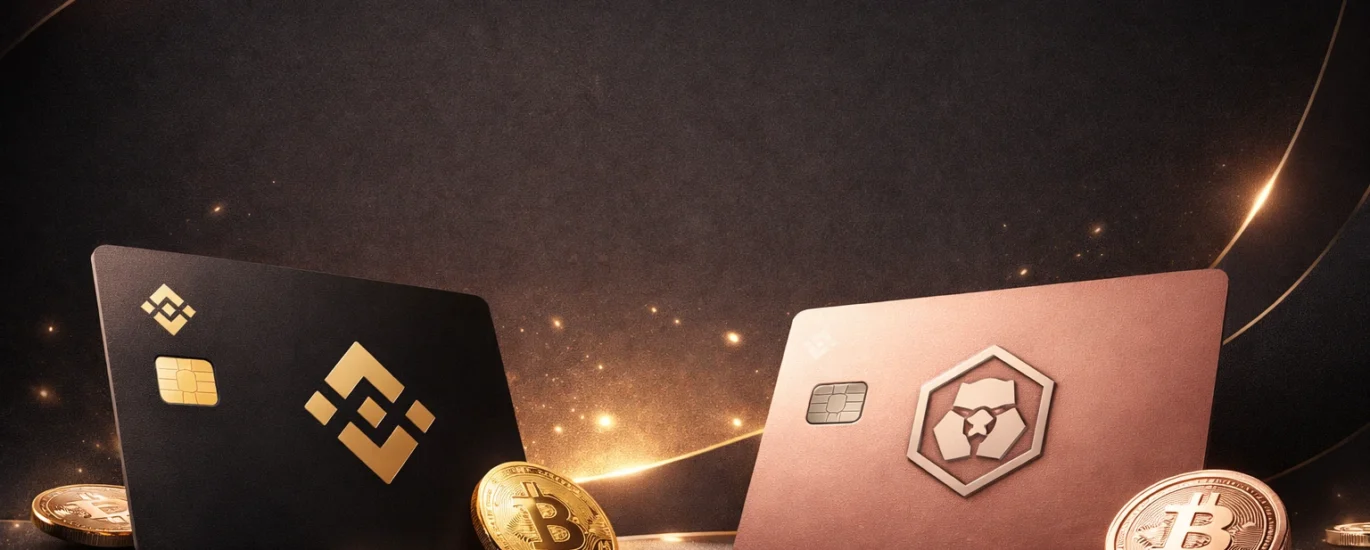
at first glance, it feels simple…
higher cashback wins
but once you go deeper, three hidden layers appear:
- conversion spreads
- staking requirements
- capital efficiency
and this is exactly where most people lose money without realizing it
How Crypto Cards Really Work in 2026
imagine this moment:
you tap your card to pay for coffee…
in milliseconds:
- your crypto is sold
- a spread is applied
- fiat is delivered to the merchant
crypto cards convert your assets instantly at the point of sale
👉 meaning: you are ALWAYS paying a hidden cost
Binance Card vs Crypto.com Card: Core Differences
| Feature | Binance Card | Crypto.com Card |
|---|---|---|
| Cashback | Up to 8% (BNB-based) | Up to 8% (CRO-based) |
| Model | Holdings-based | Staking-based |
| Token | BNB | CRO |
| Complexity | Medium | High |
| Extra perks | Limited | Netflix, Spotify, Lounge |
👉 surface view: similar
👉 reality: completely different economic models
💡 CLUSTER BOX
▣ Want the full picture before choosing?
→ Crypto Debit Cards Guide (USDT, USDC & Bitcoin 2026)
▣ Deep dive into Binance costs
→ Binance Card Fees 2026
▣ Understand country restrictions
→ Why Binance Card Doesn’t Work in the US
The Cashback Illusion (Biggest Trap)
picture this:
you see “5% cashback”
you get excited
you start using the card
but behind the scenes:
- 1–2% spread is applied
- capital is locked (staking)
- token price risk increases
Crypto.com requires CRO staking to unlock higher tiers
👉 sometimes thousands of dollars locked
Binance:
- no rigid lock requirement
- depends on BNB holdings
- BOX — Full Country List
- Binance Card Countries 2026 (Full Map)
- https://damadefi.com/binance-card-countries-2026/
👉 cashback ≠ real profit
Hidden Fees Breakdown
| Fee Type | Binance | Crypto.com |
|---|---|---|
| Conversion spread | Low | Medium |
| FX fees | Low | 0.5%–1% |
| ATM withdrawal | Variable | 1–2% after limits |
| Staking cost | Optional | Mandatory |
👉 Crypto.com looks premium
👉 Binance feels efficient
but efficiency usually wins long term
Monthly Spending Simulation
Scenario: $500 / $1,000 / $5,000 / $10,000
| Monthly Spend | Binance (2%) | Crypto.com (3%) |
|---|---|---|
| $500 | $10 | $15 |
| $1,000 | $20 | $30 |
| $5,000 | $100 | $150 |
| $10,000 | $200 | $300 |
now reality hits:
- CRO staking can cost $500 → $50,000
- spreads reduce actual returns
👉 that “extra 1%” disappears fast
💡 DAMA DEFI INSIGHT BOX
▣ Cashback is not income
▣ Cashback is marketing
▣ Profit lives in hidden costs
Capital Efficiency: The Real Game
this is where engineers win
don’t ask:
“which pays more?”
ask:
“which destroys less capital?”
Binance wins if:
- you want flexibility
- you don’t want locked capital
- you optimize for efficiency
Crypto.com wins if:
- you want lifestyle perks
- you accept capital lock
- you value status tiers
Bitcoin Accumulation Strategy (Advanced Insight)
imagine this system:
- you spend using a crypto card
- receive cashback in crypto
- convert rewards into BTC
- repeat daily
now compare:
| Strategy | Result |
|---|---|
| Binance (low friction) | More BTC accumulated |
| Crypto.com (high perks) | Higher lifestyle, lower efficiency |
👉 long-term wealth favors low friction
💡 CLUSTER BOX
▣ Want to reduce fees when spending crypto globally?
→ USDT vs Bank Transfer (Fees & Speed)
▣ Best network for transfers
→ Ethereum vs Tron vs Solana
▣ Learn how to send USDT step-by-step
→ International Transfer Guide
Final Verdict (No Emotion, Just Strategy)
this is the truth nobody says:
- Binance is a capital efficiency machine
- Crypto.com is a premium lifestyle product
both are good
but only one aligns with accumulation
👉 if your goal is Bitcoin: choose efficiency
👉 if your goal is lifestyle: choose perks
FAQ — 30 Questions About Crypto Cards (2026)
1. What is a crypto debit card?
a card that converts crypto into fiat at payment
2. Do I spend crypto directly?
no, it is converted first
3. Are fees visible?
not always — spreads are hidden
4. What is cashback paid in?
usually platform tokens (BNB or CRO)
5. Can I convert cashback to BTC?
yes, instantly on most platforms
6. Is Binance Card available worldwide?
no, restrictions apply (especially US)
7. Why is Crypto.com staking required?
to unlock cashback tiers
8. Is staking risky?
yes, token price volatility
9. Which card has lower fees?
Binance in most cases
10. Which has better rewards?
Crypto.com at higher tiers
11. Are rewards guaranteed?
no, they depend on conditions
12. What is spread?
hidden conversion cost
13. Can I withdraw cash?
yes, but with limits and fees
14. Are there FX fees?
yes, depending on region
15. Can I use USDT?
yes, in supported accounts
16. Does cashback compound?
only if reinvested
17. Can I lose money using cards?
yes, via fees and volatility
18. Is it better than a bank card?
depends on usage
19. Are crypto cards safe?
yes, if using major platforms
20. Do I pay taxes?
depends on your country
21. Is Binance better for beginners?
yes, simpler model
22. Is Crypto.com better for advanced users?
yes, if you optimize staking
23. What is the biggest mistake?
ignoring hidden costs
24. Can I hold multiple cards?
yes
25. What happens if token price drops?
your benefits lose value
26. Can cashback offset fees?
sometimes, but not always
27. Is there a monthly limit?
yes, depends on tier
28. Are rewards taxable?
in many countries, yes
29. Should I use cards daily?
only if efficient
30. What is the best strategy?
spend → earn → convert → accumulate BTC