
As active investors who have managed liquidity across various DeFi protocols and monitored the technical debt of emerging blockchains, we approach the “mobile mining” sector with extreme scrutiny. We are not just casual observers; we have deployed capital into hardware nodes and navigated the complexities of mass KYC migrations. Having skin in the game means we prioritize protocol integrity and long-term TVL (Total Value Locked) over speculative “point-clicking” mechanics. In 2026, the market has matured, and the “vinitial depreciation” phase for early mobile-mined tokens has taught us one thing: utility is the only hedge against total supply inflation.
Technical Architecture: SCP vs. Gamified Distribution
The primary technical differentiator between Pi and Bee lies in their underlying consensus layers. Pi Network is built upon a modified Stellar Consensus Protocol (SCP). This is a Federated Byzantine Agreement (FBA) system that allows for high-throughput transactions without the energy waste of Proof-of-Work.
Pi Network’s Decentralized Nodes
Pi’s security is anchored by millions of user-led “Security Circles” which inform the global trust graph. In 2026, the proliferation of Pi Nodes has decentralized the network’s consensus, allowing it to move away from the initial Core Team control. This infrastructure is what supports its TVL, as dApps can reliably query a decentralized ledger.
Bee Network’s Operational Model
Bee Network, conversely, entered the market as a “gamified” social experiment. While it successfully bootstrapped a massive user base, its technical whitepaper lacks the cryptographic depth of SCP. Bee’s ecosystem has historically relied on a centralized authority to manage the ledger, which raises concerns regarding “censorship resistance”—a core pillar for any serious crypto investor in 2026.
Utility Analysis: The 2026 Ecosystem Comparison
For a token to have value, it must be a medium of exchange or a utility asset. In the “Learn and Earn” era, we evaluate these networks by the depth of their developer documentation and the number of active dApps.
Pi Commerce and Developer SDK
Pi Network has successfully launched its Open Source (PiOS) license, leading to a surge in native applications. From decentralized marketplaces to freelance platforms, Pi tokens are used to pay for real-world services. This velocity creates a floor price that is not entirely dependent on exchange speculation.
Bee Network’s Partnership Strategy
Bee Network has focused heavily on “Play-to-Earn” (P2E) integrations and advertising-based rewards. While this generates immediate engagement, it often leads to high sell-side pressure as users “earn and dump.” For the professional investor, the lack of a robust smart contract layer for third-party DeFi integrations remains a significant risk factor for Bee Network.
Comparative Risk and Fee Table
| Metric | Pi Network (2026) | Bee Network (2026) | Risk Assessment |
| Consensus Algorithm | SCP (Federated Byzantine) | Centralized/Social Proof | Pi is more secure/decentralized. |
| Transaction Fee | 0.01 Pi (Fixed) | Variable/In-app | Pi offers predictable gas costs. |
| Audit Status | Multiple External Audits | Limited Public Audits | Bee carries higher technical risk. |
| Mainnet Status | Open Mainnet Transition | Phase 3 / Partnership Focus | Pi has higher liquidity potential. |
| KYC Rigor | Decentralized/Human Hybrid | Centralized/AI-based | Pi is more Sybil-resistant. |
Usability and Security: The Investor’s Perspective
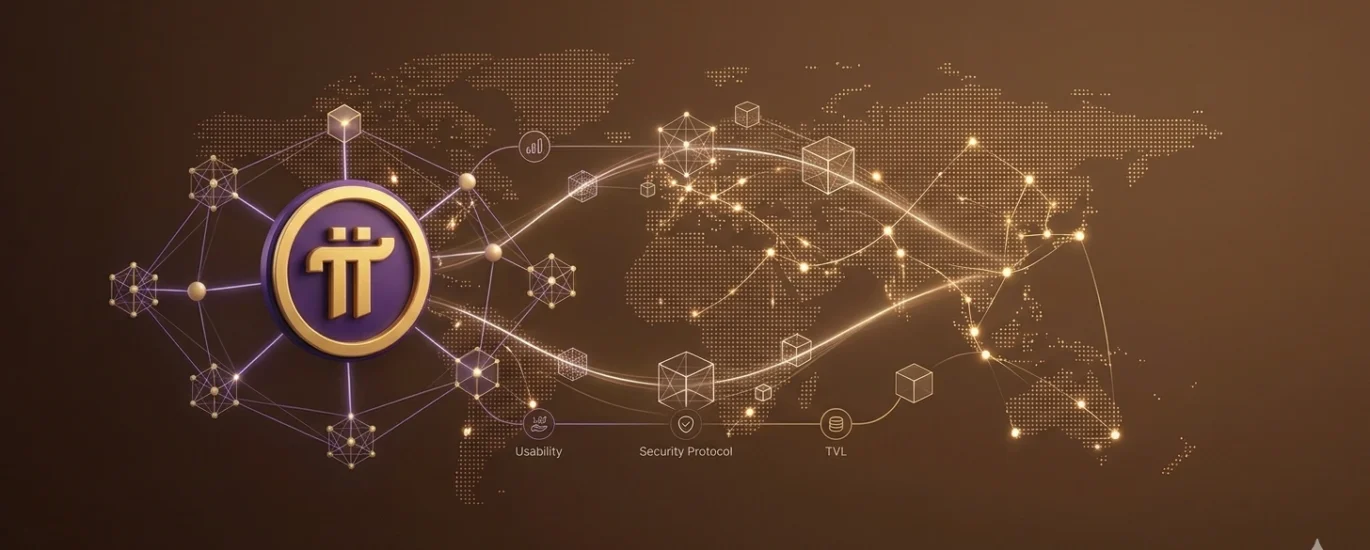
Usability in 2026 is no longer just about a “pretty UI.” It is about interoperability. Pi Network’s focus on bridges to other Layer-1 networks has increased its utility as a bridge asset for mobile-first economies.
Security of Private Keys
Pi’s non-custodial wallet architecture ensures that Pioneers retain control of their passphrases. In contrast, many early mobile mining clones (including several Bee-inspired projects) struggled with custodial security issues, leading to the loss of user funds during unauthorized migrations.
TVL and Institutional Interest
Total Value Locked is the heartbeat of a blockchain. Pi’s TVL is growing because of its “Enclosed Period” which prevented a massive dump, allowing the dApp ecosystem to mature. Bee Network has struggled to attract the same level of institutional TVL because its primary use case remains consumer-facing rewards rather than decentralized finance or institutional settlements.
Protocol Sustainability: Learn and Earn
To be “worth it” in 2026, a mobile-mined asset must show a path to deflationary pressure. Pi achieves this through a declining mining rate (halving) and transaction fee burns. Bee Network’s inflation model is more aggressive, which often results in higher volatility for early holders.
The Verdict for 2026
Investors should treat Pi as a Layer-1 infrastructure play—similar to a mobile-optimized version of Stellar or Solana. Bee Network remains a higher-risk “Community/Social” play. If you have limited hardware resources, a Pi Node offers a more technically sound “Learn and Earn” path than social-only mining.
People Also Ask (FAQ)
- Which is better, Pi or Bee Network?Technically, Pi Network is more mature due to its Stellar-based consensus and extensive dApp ecosystem.
- Is Bee Network a scam?There is no evidence of a scam, but it has historically lacked the technical transparency of Pi Network.
- Can I mine Pi and Bee on the same phone?Yes, both apps run independently and do not significantly drain battery life.
- When will Bee Network hit the Open Mainnet?Bee is currently in its final phases, focusing on partner integrations before a full exchange listing.
- How much is 1 Pi worth in 2026?The price is market-driven; refer to our [Pi Price Prediction article] for a deep dive.
- What is the utility of Bee token?Bee is primarily used for in-game purchases, partner discounts, and advertising rewards.
- Is Pi Network KYC safe?Yes, Pi uses a decentralized validation method to protect user privacy while meeting AML standards.
- Does Bee Network require a Node?Currently, Bee does not have a widely deployed decentralized node infrastructure like Pi.
- Who has more users, Pi or Bee?Pi Network maintains a larger active user base, exceeding 60 million pioneers by 2026.
- What is the SCP in Pi Network?The Stellar Consensus Protocol, a mechanism that allows nodes to agree on transactions without mining.
- Can I transfer Bee to my bank account?Only after it is listed on an exchange and traded for fiat or stablecoins.
- Is my data safe with Bee Network?Bee has faced criticism regarding data privacy in the past; always check the latest app permissions.
- Why does Pi have a lock-up period?To prevent a market crash at launch and to incentivize long-term ecosystem growth.
- Is Bee Network a Layer-1 blockchain?It functions more like a Layer-2 or a dApp on a centralized ledger, though it aims for more decentralization.
- What is the Bee Network whitepaper?It outlines the project’s roadmap, focus on social gamification, and tokenomics.
- Is mobile mining bad for my phone?No, both apps use a “check-in” system that does not use the phone’s CPU for actual hashing.
- Can I sell Pi for Bee?Only through a decentralized exchange (DEX) that supports bridges for both tokens.
- Which has more institutional support?Pi Network has shown more significant progress in developer SDKs and global merchant adoption.