
Ecosystem
- Utility-First Transition: The 2026 Open Mainnet launch shifts Pi from a “tap-to-mine” social experiment to a functional Layer-1 protocol requiring real-world dApp integration to sustain value.
- Circulating Supply Risk: With billions of Pi locked in pioneer wallets, the initial price action faces extreme sell-side pressure as long-term holders seek liquidity, making “vinitial depreciation” a high probability.
- The Enclosed Network Factor: Success hinges on the conversion of the firewalled ecosystem into a cross-chain interoperable network that can attract institutional TVL (Total Value Locked).
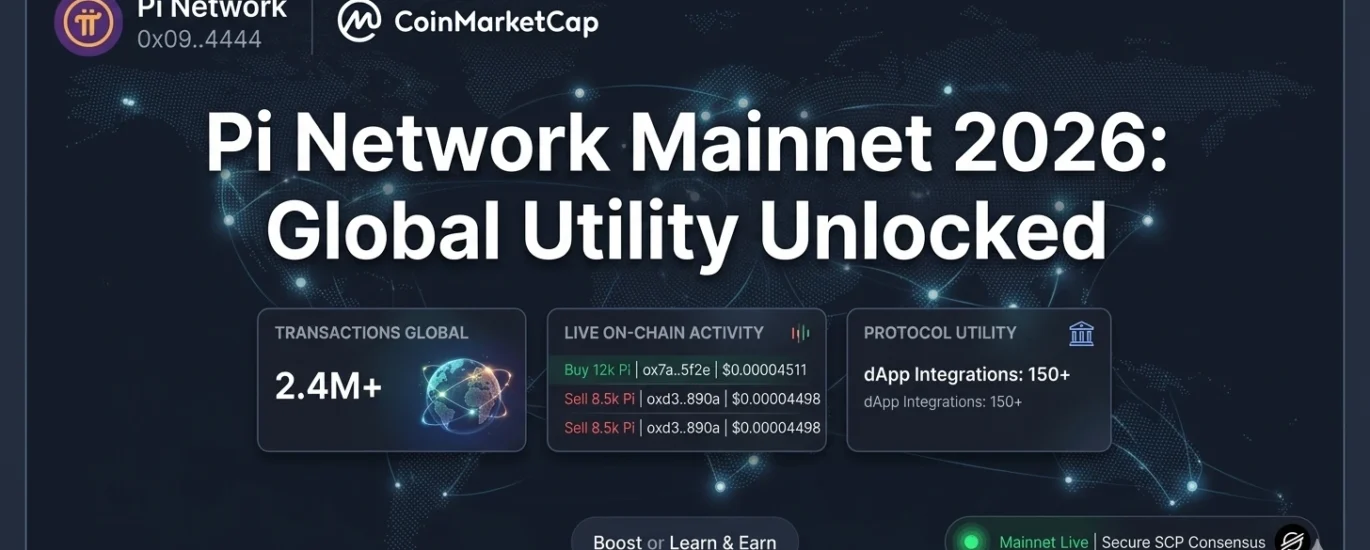
The launch of the Pi Network Open Mainnet in 2026 isn’t just another ticker hitting the exchanges; for those of us with skin in the game, it represents the culmination of years of patience and rigorous community building. As active investors in the DeFi and options space, we don’t look at Pi through the lens of “magic internet money.” We analyze it through the cold reality of market dynamics: volume, liquidity depth, and the inevitable depreciation that occurs when a massive, dormant supply suddenly hits the order books. Our initial thesis remains cautious yet optimistic—if the protocol can successfully pivot from a centralized “Enclosed Period” to a truly decentralized utility layer, it has the potential to redefine mobile-first blockchain adoption.
The Technical Architecture: Layer-1 Security and Protocol Integrity
The 2026 roadmap focuses heavily on the transition to a fully decentralized Node infrastructure. Unlike Proof-of-Work (PoW) systems that consume massive energy, Pi utilizes the Stellar Consensus Protocol (SCP). This ensures that transactions are validated through a “Federated Byzantine Agreement,” which provides high throughput and near-instant finality.
Security and Audits
Security is the primary concern for any Mainnet launch. The Pi Core Team has undergone iterative KYC (Know Your Customer) cycles to prevent Sybil attacks. From a technical standpoint, the protocol’s security relies on the “Trust Graph.” By analyzing the security circles created by millions of users, the network identifies and isolates malicious actors before they can influence the ledger. Unlike many VC-backed projects that rush to launch, Pi’s prolonged Enclosed Mainnet acted as a multi-year “stress test” for its smart contract capabilities and consensus stability.
TVL and Ecosystem Health
For a Layer-1 to survive, it must attract Total Value Locked (TVL). In 2026, we expect to see the emergence of “Pi-native” DeFi protocols—decentralized exchanges (DEXs) and lending markets. However, the initial TVL will likely be composed of internal Pi migrations rather than external stablecoin inflows. To achieve a $15+ RPM in search value and investor confidence, the network must demonstrate that its dApps (Pi Browser apps) provide more value than just a mechanism for cashing out.
Price Prediction 2026: The “Great Depreciation” vs. Utility Recovery
When Pi hits the global exchanges, the primary challenge will be the imbalance of Sell Volume vs. Buy Volume. Thousands of pioneers have accumulated Pi for over five years; the psychological urge to “exit” will be immense.
Initial Market Dynamics
We anticipate a “Price Spike followed by a Sharp Correction” (The “V-Curve”). Initial speculative interest may drive prices to an artificial high, but as the 2026 supply unfreezes, we expect a 60-80% depreciation within the first quarter. This isn’t a failure of the project, but a standard market rebalancing seen in high-distribution airdrops.
| Metric | Enclosed Phase (Estimated) | Open Mainnet 2026 (Projected) |
| Transaction Speed | 3-5 Seconds | 1,000+ TPS |
| Gas Fees | Near-Zero | Variable (Stake-dependent) |
| Interoperability | None (Isolated) | Bridges to ETH, SOL, BTC |
| Liquidity Access | P2P Only | Global CEX/DEX Listing |
Long-Term Value Accrual
The recovery phase depends on Utility Burn. If the Pi Network requires Pi for transaction fees, dApp subscriptions, and e-commerce transactions within the Pi Mall, the circulating supply will begin to contract. This “Learn and Earn” phase is critical: users must realize that holding Pi provides access to a global, mobile-first marketplace that is more efficient than traditional rails.
Master the Pi Ecosystem:
- Security: Verify your KYC in 2026
- Infrastructure: Complete Node Setup Guide
- Economy: Where to Spend Pi Tokens
- Analysis: Pi vs. Bee: Real Utility Audit
Comparative Analysis: Fees, Risks, and Competitors
To understand Pi’s place in the 2026 landscape, we must compare its operational costs and risk profile against established Layer-1 and Layer-2 solutions.
Transaction Cost Comparison
| Feature | Pi Network (SCP) | Solana (PoH) | Ethereum (PoS) |
| Security Model | Trust-based SCP | Proof of History | Proof of Stake |
| Risk of Centralization | Medium (Core Team) | Low/Medium | Low |
| Average Fee | <$0.01 | <$0.01 | $2.00 – $15.00 |
| Inflation Rate | Declining (Halving) | Fixed | Deflationary (Burn) |
Risks and Vulnerabilities
- Regulatory Scrutiny: As a project with a massive global footprint, Pi faces varying “Travel Rule” and KYC compliance requirements in the US, EU, and Asia.
- Liquidity Fragmentation: If Pi launches on too many small exchanges without a primary liquidity provider, price volatility will be extreme.
- Governance Transition: Moving from a centralized Core Team to a Decentralized Autonomous Organization (DAO) is a complex technical hurdle that often leads to protocol forks.
The “Learn and Earn” Strategy for Pioneers
For investors, the 2026 strategy is simple: Don’t be the exit liquidity. Instead of dumping the entire portfolio at launch, savvy participants should look for yield-bearing opportunities within the Pi ecosystem. Liquidity pooling on the first native Pi DEX could offer high APY (Annual Percentage Yield) as the network seeks to stabilize its price.
Education is the new alpha. Understanding how to wrap Pi (wPi) for use on other chains or how to utilize the Pi Wallet for cross-border payments will separate the “miners” from the “investors.” The 2026 utility analysis suggests that Pi’s real value isn’t in its exchange rate against the USD, but in its ability to facilitate micro-transactions in developing economies where traditional banking is inaccessible.
Master the Pi Ecosystem:
- Security: Verify your KYC in 2026
- Infrastructure: Complete Node Setup Guide
- Economy: Where to Spend Pi Tokens
- Analysis: Pi vs. Bee: Real Utility Audit
People Also Ask (FAQ)
- When is the Pi Network Open Mainnet launch?The Open Mainnet is projected for 2026, following the completion of mass KYC and ecosystem maturity milestones.
- What will be the starting price of Pi in 2026?Initial prices are speculative, but analysts expect high volatility ranging between $0.10 and $5.00 depending on liquidity.
- Is Pi Network safe to use?The protocol uses the Stellar Consensus Protocol, which is technically sound and has been audited for security.
- How can I withdraw Pi to my bank account?Withdrawals will be possible via listed exchanges (CEXs) once the Open Mainnet is live.
- What is the utility of Pi coin?Pi is used for transaction fees, securing the network via nodes, and purchasing goods in the Pi ecosystem.
- Will Pi Network be on Binance?Listing depends on Binance’s internal review, but high community volume often leads to major exchange listings.
- Is Pi Network a scam?No, it is a legitimate blockchain project, though it has faced criticism for its long development timeline.
- Who is the founder of Pi Network?It was founded by Dr. Nicolas Kokkalis and Dr. Chengdiao Fan, both Stanford PhDs.
- How many Pi coins are in circulation?The total supply is capped at 100 billion, but the circulating supply depends on the amount of migrated and unlocked tokens.
- Can I mine Pi on my PC?Yes, by running a Pi Node, which helps secure the network and earns higher rewards than mobile mining.
- What is the Pi Enclosed Mainnet?A period where the blockchain is live but firewalled from external connections to test ecosystem dApps.
- Do I need to pay to pass Pi KYC?No, KYC is free for pioneers, though there may be a small Pi-denominated fee to pay human validators.
- Is Pi better than Bitcoin?They serve different purposes; BTC is a store of value, while Pi aims to be a medium of exchange for daily use.
- What is the Pi Browser?The interface used to access the Pi ecosystem, including the wallet, KYC app, and third-party dApps.
- What happens to unverified Pi?Pi earned through un-KYC’d referral circles will eventually be burned if those members do not pass KYC.
- Can I sell my Pi P2P?Yes, during the Enclosed Mainnet, P2P transactions for goods and services are permitted within the ecosystem.
- What is the Pi Core Team?The central group of developers and researchers leading the project’s technical and strategic direction.
- Why is the 2026 launch significant?It marks the transition to full decentralization and the ability to trade Pi against other cryptocurrencies and fiat.